

This post may contain affiliate links. If you decide to make a purchase through these links, I earn a small commission at no cost to you. I do not promote anything I do not believe in or stand behind.
Some Christian books that changed my life did not give me completely new theology.
Instead, they helped me see familiar biblical truths more clearly.
I have loved books since I was young. Over the years, Christian writers from different theological traditions have challenged me to think more deeply about God, spiritual formation, ministry, leadership, prayer, holiness, and the work of the Holy Spirit.
Yet one principle remains essential:
No Christian book replaces the Bible.
Scripture is inspired by God and remains our final written authority for faith and life. Other books are valuable only insofar as they help us understand truth, ask better questions, recognize our blind spots, and return to God’s Word with greater hunger.
In 2017, five books stood out to me in particular.
Years have passed since I first read them. Nevertheless, I still remember what each one added to my thinking.
I do not agree with every statement made by every author on this list. Therefore, this is not an endorsement of everything they have ever taught.
It is a personal reflection on five books God used to challenge me.
Disclosure: If you keep affiliate links to these books, include one short disclosure here rather than the long affiliate section at the end.
Why Christian Books That Changed My Life Still Matter
Reading is one way we can learn from Christians who have walked with God in different generations, cultures, and traditions.
A good book allows us to sit for several hours with someone’s accumulated experience.
We can learn from:
their successes,
their failures,
their theological reflection,
their questions,
and their years of ministry.
However, reading Christian literature requires discernment.
Acts 17:11 praises the Bereans because they examined the Scriptures to test what they heard.
Similarly, Christians should never accept an idea merely because a respected author wrote it.
Read widely.
Think carefully.
Keep Scripture open.
And learn to say both:
“This helped me.”
and:
“I do not believe this part is biblical.”
Those two statements can exist together.
The Bible Comes Before Every Other Book
Before sharing my five books, I need to establish the order.
The Bible is not merely one important Christian book among many.
It is God’s inspired Word.
Second Timothy 3:16–17 says Scripture is God-breathed and equips the believer for every good work.
Therefore, my personal rule has been simple:
Christian books should lead me toward Scripture rather than compete with Scripture.
If I have time to read hundreds of pages from Christian authors but almost no time for God’s Word, something in my priorities needs attention.
Other writers can illuminate.
Scripture governs.
Authors can advise.
God’s Word carries final authority.
That distinction allows us to benefit from gifted writers without turning them into unquestionable spiritual authorities.
For more on developing a reading life:
1. One of the Christian Books That Changed My Life: God’s Generals

One book that strongly affected me was Roberts Liardon’s God’s Generals: Why They Succeeded and Why Some Failed.
What interested me most was not simply reading stories about remarkable ministries.
It was the combination of strength and weakness.
The book introduces figures associated with revival and healing movements, including William J. Seymour, Smith Wigglesworth, John G. Lake, Kathryn Kuhlman, Charles Parham, and others.
Reading biographies like these reminds us that God can use imperfect people.
At the same time, unusual gifting does not remove the need for:
character,
theology,
accountability,
humility,
and perseverance.
That lesson has stayed with me.
Learn From Christian Leaders Without Idolizing Them
Biographies become dangerous when we turn their subjects into heroes who apparently never made mistakes.
Scripture does not treat its own leaders that way.
Abraham had weaknesses.
Moses failed.
David sinned terribly.
Peter denied Jesus.
Therefore, when reading Christian history, I want to ask two questions:
What can I imitate?
And:
What should I avoid?
That approach makes biography far more useful.
A Christian leader’s gifting may inspire me.
Their mistakes may protect me.
Both can teach.
For that reason, this book helped me think more seriously about finishing ministry faithfully rather than merely beginning powerfully.
2. The Spirit of the Disciplines by Dallas Willard
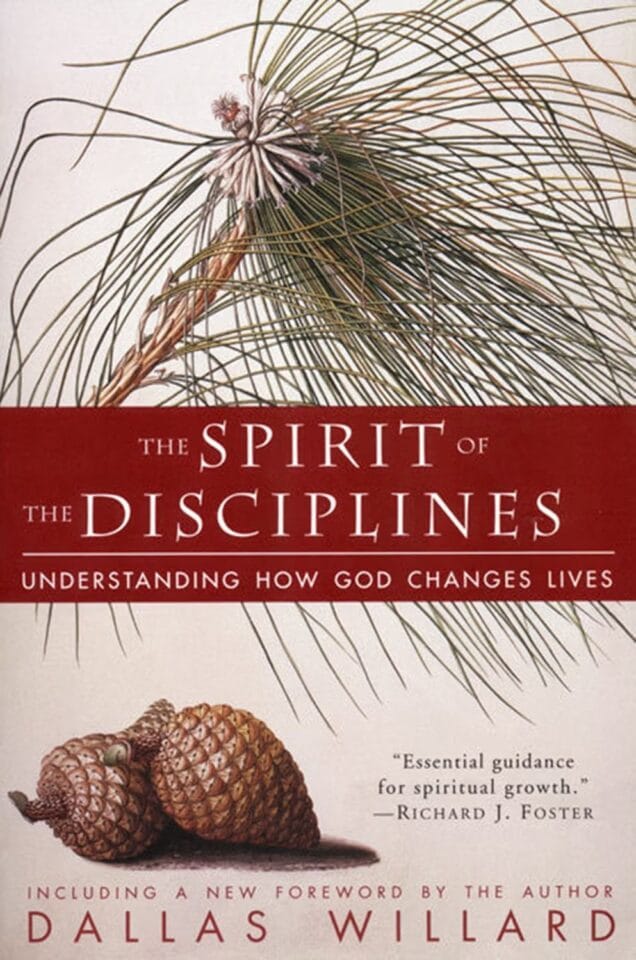
Another of the Christian books that changed my life was Dallas Willard’s The Spirit of the Disciplines.
I first read it as part of my theological studies.
Before that, I understood practices such as prayer, solitude, fasting, worship, study, and service as important Christian activities.
Willard helped me think more deeply about why spiritual disciplines matter.
The disciplines do not earn God’s love.
Neither do they make us spiritually superior.
Instead, properly practiced, they place us in rhythms where we intentionally make ourselves available to God’s transforming grace.
That distinction was important for me.
Spiritual Disciplines Are Means, Not the Goal
A person can fast and become proud.
Read Scripture and become argumentative.
Pray for hours while treating family members badly.
Therefore, performing a spiritual discipline is not itself proof of spiritual maturity.
The goal is Christlikeness.
Prayer should shape us.
Scripture should renew our minds.
Solitude should help quiet the competing voices demanding our attention.
Fasting can expose desires that control us.
Service confronts self-centeredness.
Consequently, spiritual disciplines should never become trophies.
They are practices that help train us toward faithful life with God.
This book helped me connect discipline with transformation, and that insight has continued to influence my spiritual life.
3. Christian Books That Changed My Life: Spiritual Direction
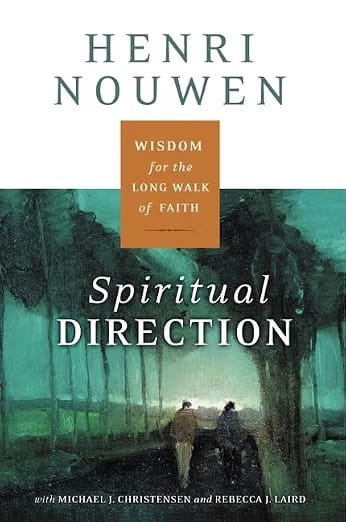
Another influential book was Spiritual Direction: Wisdom for the Long Walk of Faith, associated with the teaching of Henri Nouwen.
This book introduced me more deeply to questions of inner life, listening, prayer, identity, community, and spiritual formation.
I did not agree with every theological emphasis I encountered.
That is worth saying clearly.
Reading with discernment does not require agreeing with an author at every point.
However, a book can still ask valuable questions.
Nouwen’s reflections challenged me to examine what was happening inside my soul rather than judging spiritual health merely by outward activity.
Ministry Activity Is Not the Same as Spiritual Health
Pastors can preach while spiritually exhausted.
Leaders can organize ministries while neglecting their own souls.
Christians can serve everyone around them yet rarely become quiet before God.
That is why questions about our inner life matter.
What am I afraid of?
Where am I seeking approval?
What am I avoiding?
Is my identity rooted in Christ or in what people think about me?
Am I actually listening to God through His Word and prayer?
Those questions can be uncomfortable.
Nevertheless, they can reveal areas where outward religious activity hides inward disorder.
This book reminded me that Christian formation involves both what we do and the kind of person we are becoming.
4. Ministry in the Image of God by Stephen Seamands

Stephen Seamands’ Ministry in the Image of God: The Trinitarian Shape of Christian Service gave me another important perspective.
Its central theme is powerful:
Christian ministry is fundamentally Trinitarian.
The Father sends.
The Son ministers in obedience to the Father.
The Holy Spirit empowers the mission.
Therefore, ministry cannot ultimately be about building my name, my platform, or my personal kingdom.
It participates in what God is doing.
This understanding helps protect ministry from becoming merely professional religious activity.
Christian Ministry Begins With God, Not With Us
Pastors sometimes speak about:
“my church,”
“my ministry,”
“my people,”
or:
“my vision.”
Some of that language is simply conversational.
Yet it can slowly reveal a dangerous assumption—that ministry fundamentally belongs to us.
It does not.
Jesus is building His Church.
We serve Him.
Therefore, Christian ministry should flow from communion with the Triune God rather than frantic attempts to manufacture spiritual success.
Seamands helped me think more deeply about ministry as participation in the Father’s mission, through the Son, in the power of the Holy Spirit.
That remains deeply important to me.
5. The 21 Irrefutable Laws of Leadership by John C. Maxwell
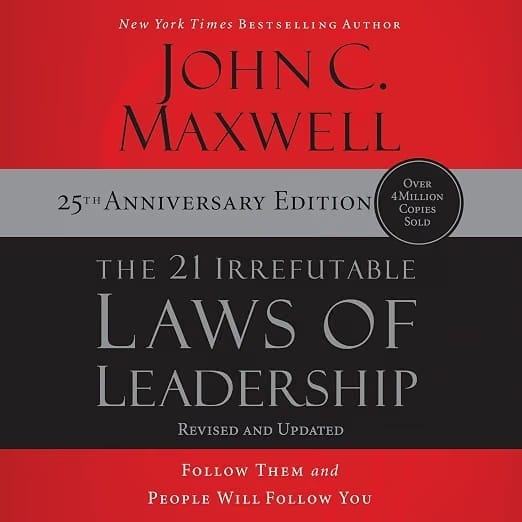
The fifth book is quite different from the others.
John C. Maxwell’s The 21 Irrefutable Laws of Leadership is primarily a leadership book rather than systematic Christian theology.
Nevertheless, it challenged me to think about influence, growth, priorities, timing, team development, and the responsibility that comes with leadership.
Leadership matters in church ministry too.
A pastor may have sound theology yet still need to learn how to:
communicate clearly,
develop others,
organize,
delegate,
make decisions,
and steward influence.
Therefore, practical leadership literature can be useful.
Leadership Principles Must Remain Under Scripture
At the same time, Christians should not simply baptize every business leadership principle.
The model for Christian leadership is ultimately Jesus.
He serves.
He sacrifices.
He tells His disciples that greatness in His Kingdom looks different from greatness among worldly rulers.
Therefore, whenever secular or general leadership principles conflict with Christ’s teaching, Christ wins.
Influence is valuable.
Character matters more.
Vision is important.
Faithfulness matters more.
Results can tell us something.
However, numerical success alone cannot determine whether ministry pleases God.
Maxwell’s book gave me useful leadership categories, while Scripture gives me the framework through which those categories must be judged.
For more of my reading recommendations for leaders:
What These Five Christian Books That Changed My Life Had in Common
These five books are very different.
One examines revival history.
Another explores spiritual disciplines.
One reflects on the inner spiritual journey.
Another develops a Trinitarian theology of ministry.
The final book focuses on leadership.
Yet each one forced me to examine an area of my life.
That is one sign of valuable reading.
Good books should not merely increase the amount of information stored in our minds.
They should make us think.
Sometimes they challenge assumptions.
At other times, they give language to something we already sensed.
Occasionally, they expose weaknesses.
The best Christian reading ultimately sends us back toward God, Scripture, prayer, obedience, community, and Christlike character.
Do Not Believe Everything You Read
One principle has become increasingly important to me:
You can learn from someone without making that person your theological authority.
I have benefited from authors with whom I strongly disagree on certain issues.
That is not necessarily a contradiction.
First Thessalonians 5:21 gives a helpful principle:
“Test everything; hold fast what is good.”
Discernment requires both parts.
Some Christians only practice the first:
they criticize everything.
Others only practice the second:
they accept almost everything.
Mature reading requires testing and retaining what is true.
Therefore, do not ask merely:
“Do I like this author?”
Ask:
“Is this idea consistent with Scripture?”
Read Across Generations
Another advantage of reading is escaping the prison of the present moment.
Modern Christians are easily shaped by today’s controversies, vocabulary, social media algorithms, and popular preachers.
Older books remind us that the Church existed long before our current debates.
Reading across generations introduces us to questions we might never have thought to ask.
It also helps us notice when an idea marketed as revolutionary is actually very old.
Of course, old does not automatically mean true.
New does not automatically mean false.
Scripture remains the standard.
However, listening to believers from other generations can make us more humble about our own.
Christian Books That Changed My Life Should Lead Me Toward Christ
Ultimately, I do not want to become someone who merely reads many books.
I want to know Christ.
Books are tools.
They are not the destination.
A theological library can increase pride just as easily as knowledge.
Therefore, the question after reading should not only be:
“What did I learn?”
We should also ask:
“How should this change the way I live?”
Did the book make me more prayerful?
More faithful?
More discerning?
Did it expose something I need to repent of?
Has it helped me serve people better?
Does it make me love Scripture more?
Those questions matter far more than the number of books I finish.
Five Christian Books That Changed My Life—and One Book Above Them All
Looking back, these five books influenced different areas of my journey:
God’s Generals reminded me to learn from both the strengths and failures of Christian leaders.
The Spirit of the Disciplines helped me understand spiritual formation more deeply.
Spiritual Direction pushed me to examine the inner life.
Ministry in the Image of God gave me a richer Trinitarian vision of Christian ministry.
The 21 Irrefutable Laws of Leadership challenged me to grow intentionally as a leader.
I am thankful for each one.
Yet none stands beside Scripture.
Authors can help us for a season.
God’s Word forms us for a lifetime.
Therefore, read good books.
Learn from gifted people.
Remain humble.
Test what you read.
Take what is true.
Reject what contradicts Scripture.
And above everything else, keep returning to Jesus through His Word.
The best Christian books that changed my life did not make me depend more on authors—they helped me ask better questions as I followed Christ.
Continue the Study
Books I recommend more broadly to Christians:
Books for Christian leaders:
Why leaders should develop a reading habit:
Why God’s Word must remain central:

I am a blogger, writer, pastor, Director of Zion Romania Bible School, husband to Olguta, a father and, most importantly, a child of God. I also completed my studies at the King’s University where I earned a B.A. in Theology with a concentration in Messianic Jewish Studies. I love Israel and I love the ‘Jewishness’ of the Bible.

Well, i love reading also.
The books that impacted my life last year are:
1. Andrew Wommack ” The beleiver’s authority, and what you didn’t learn in the church”
2. Marilyn Hontz” The shame lifter”
3. Robert D. Heidler ” Set yourself free”
Sonila,
I also read Robert Heidler’s book. Good book indeed. And Andrew Wommack is one of the Bible teachers I follow regularly. Thank you for sharing!
Onisim