
This post may contain affiliate links. If you decide to make a purchase through these links, I earn a small commission at no cost to you. I do not promote anything I do not believe in or stand behind.

You close the browser, but a picture you wish you could forget comes back. For a moment you wonder, “Have I really changed at all?”
If that is where you are today, take heart. An unwanted memory does not undo your repentance or mean that God has turned away from you. There is room in the Christian life for real struggle and real growth at the same time.
Learning to renew your mind from pornography can begin with putting some distance between you and what draws you back to the screen. God is also at work beneath those habits. God’s truth reshapes what we call good, where we look for comfort, and how we see the people around us. And in Romans 12, Paul begins with something we can easily forget when we’re discouraged: the mercy of God.
Renew your mind from pornography by starting with mercy
Before Paul asks us to offer ourselves to God, he reminds us of all that God has done for us (Romans 12:1). You can face the truth about your choices because Christ receives you by grace. Your best week did not earn His mercy, and you don’t have to put on a good face before you come to Him.
Notice that Paul speaks about our bodies before he speaks about our minds. Following Christ reaches right into the ordinary choices of the day, including where we go, what we do, and what we keep within reach. Deleting an app that keeps drawing you back may be a wise act of obedience. It is also worth asking what you’ve been telling yourself in the moments when you reach for it.
Maybe the thought is, “I’ve felt ignored all day. I deserve something that makes me feel better.” God’s mercy makes it possible to admit that thought and look at it honestly. He cares that you are hurting, and His Word can show you where to turn for comfort.
What “renewing” means in Romans 12:2
The word Paul uses for “renewing” is anakainōsis, which carries the idea of renewal or renovation. In Titus 3:5, renewal is associated with the Holy Spirit. In Romans 12:2, we see what it looks like in daily life: we learn to recognize what pleases God instead of letting the world around us tell us what to value.
The verb dokimazō has to do with testing or discerning. The NET translation note on Romans 12:2 points out that this discernment moves toward approval. Compare the lexical entries for anakainōsis and dokimazō as you read the verse.
That gives us a gentler and more searching question than “Did an image enter my mind?” We can ask, “What am I learning to see as good?” Even with fewer opportunities to watch pornography, we may still be drawn to the way it invites us to see people. The Spirit can teach us to see them differently.
Identify the belief beneath the fantasy
Picture a man who turns to fantasy after being criticized. He may be telling himself, “Here, nobody can reject me or tell me I got it wrong.” Another man has had a good day and tells himself, “I’ve worked hard. I deserve this.” The same action can grow out of very different thoughts.
You may not find a complicated reason under every temptation. Sometimes you simply want pleasure. Even then, it helps to ask what you expected pornography to give you. Loneliness is real, and rejection hurts. Can you name what you need without giving yourself permission to seek it in a way that reduces someone else to an object?
Try writing one honest sentence: “When I feel ___, I tell myself ___, and that makes ___ seem acceptable.” Then bring that one sentence to God in prayer. Let Scripture speak to the reason you’ve been giving yourself, as well as to the choice it leads to.
Taking thoughts captive requires reading the whole passage
Read 2 Corinthians 10:3–5 with the verses around it. Paul is describing his ministry against arguments and proud claims that oppose the knowledge of God. That original setting matters when we apply his words to our own thinking.
Take a belief like “My body belongs only to me” or “Grace means my choices don’t matter.” Those are claims we can bring honestly under Christ’s authority and test against what He has said.
If a thought comes uninvited, you don’t need to chase it down and examine it over and over. You can let it pass without feeding it and turn your attention back to the person or task in front of you.
Renewed thinking moves toward what is good
In Philippians 4:8–9, Paul asks us to give our attention to what is true and worthy, then to put into practice what we’ve learned. Look around at what is already in front of you. Is there a conversation you could give your full attention to? A useful task you could finish? A few quiet minutes to read a paragraph of Scripture or enjoy a walk?
On a hard evening, closing the screen may be the first faithful step. The next might be doing the dishes or listening patiently to your child. These ordinary acts put our attention back where love calls for it: on real people entrusted to our care.
That’s why learning to stop objectifying women is part of discipleship. A woman has dignity regardless of what anyone imagines about her. We can learn to honor that dignity even when no one else sees where we direct our attention.
Practice a response without punishing yourself
When an old image appears, keep the next step simple. You might pray, “Lord Jesus, help me respond faithfully.” If the device is feeding the temptation, put it down. Then return to the person or the work before you.
If you chose to dwell on the fantasy, confess that choice honestly and turn toward obedience. If the memory came against your wishes, you can let it go without treating its arrival as a decision you made. You don’t have to hurt yourself or repeat a prayer until you feel clean. Ask for help and take the next step, even if your feelings take longer to settle.
Some people are worn down by intrusive thoughts and repeated checking. The National Institute of Mental Health explains those patterns and notes that repeated thoughts do not necessarily indicate a disorder. If this is disrupting your daily life, seek an assessment from a qualified professional alongside pastoral care. You deserve help with what you’re carrying.
A renewed mind also learns humility and community
After calling us to renewed thinking, Paul talks about seeing ourselves honestly and belonging to one body (Romans 12:3–8). That makes a difference when shame tells you to hide or when pride tells you that you can manage alone.
A trusted friend might help you see that a setback doesn’t erase all your progress. That same friend might have the courage to challenge a choice you’ve been making excuses for. We need people who can do both with kindness.
Try sharing the thought underneath the behavior: “I keep telling myself that when I feel uncomfortable, I have permission to escape.” You and your friend can bring that belief to Scripture together. The Spirit often works through this kind of encouragement and honest correction. If you’re unsure who to ask or how to begin, here is a guide to Christian accountability.
A seven-day practice for renewing your mind
Set aside a few quiet minutes each day this week for Romans 12:1–8. Read it slowly. You don’t have to cover a lot of ground to pay close attention to what God is saying.
- Day one: Notice the mercy on which Paul bases his appeal.
- Day two: Name one bodily habit you could offer to God as an act of worship.
- Day three: Write down one permission you’ve been giving yourself.
- Day four: Ask what the passage says to that permission.
- Day five: Choose one ordinary act that puts what you’re learning into practice.
- Day six: Talk about what you’ve noticed with a believer you trust.
- Day seven: Thank God for one specific way He helped you, and name what still needs attention.
A week is a place to begin. If you want a broader daily rhythm, consider these five habits for pornography recovery.
Look for the fruit of renewed judgment
Perhaps you notice an excuse sooner than you used to, stop feeding a fantasy, or admit something you once would have explained away. Give thanks for that. Over time you should also see changes in how you act, how you treat people, and how you make things right when you’ve hurt someone.
If an old memory comes back tomorrow, remember what your hope rests on. Jesus died and rose for sinners. The Spirit’s work in you rests on His grace, not on how quiet your mind feels today.
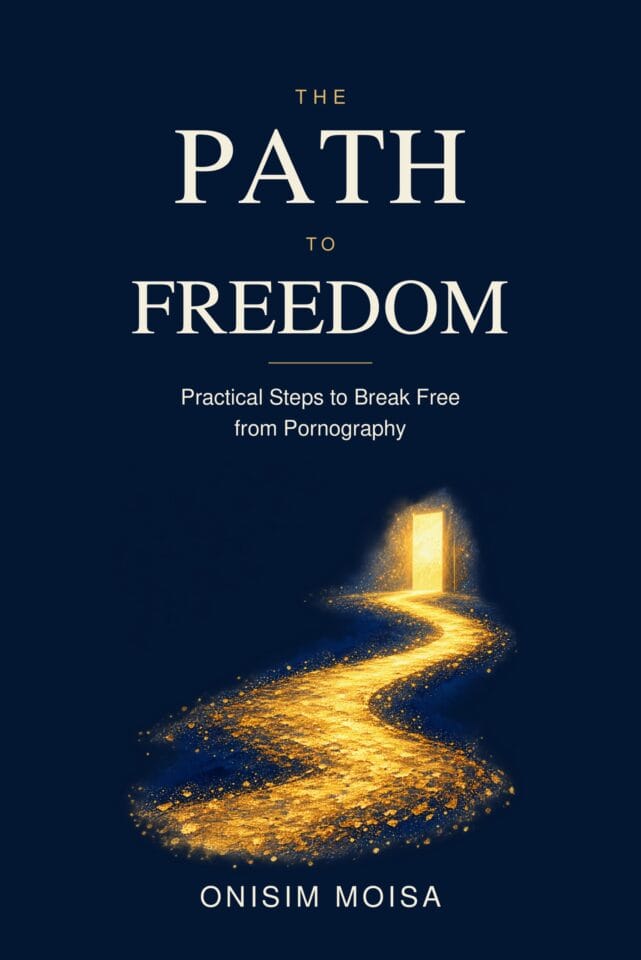
If you can do just one thing today, name a permission you’ve been giving yourself, read a truth from Scripture that answers it, and put that truth into practice in one small choice. As you learn to renew your mind from pornography, let God’s mercy be the place you return to again and again.
AI assistance disclosure: AI tools assisted with editorial organization and English-language preparation of this article. Biblical explanations and practical recommendations remain my responsibility.

I am a blogger, writer, pastor, Director of Zion Romania Bible School, husband to Olguta, a father and, most importantly, a child of God. I also completed my studies at the King’s University where I earned a B.A. in Theology with a concentration in Messianic Jewish Studies. I love Israel and I love the ‘Jewishness’ of the Bible.

Leave a Reply