

This post may contain affiliate links. If you decide to make a purchase through these links, I earn a small commission at no cost to you. I do not promote anything I do not believe in or stand behind.
What are some of the best books for Christian leaders who want to grow spiritually, understand Scripture more deeply, and lead more wisely?
The Bible must always remain our primary book.
No theologian, preacher, leadership expert, or Christian author can take the place of Scripture.
Nevertheless, good books can help us see truths we have overlooked, learn from believers who came before us, strengthen our thinking, and become better teachers and leaders.
Over the years, I have discovered that reading widely has helped me both spiritually and practically.
Some books have deepened my understanding of God.
Others have helped me teach Scripture.
A few have challenged the way I think about leadership, ministry, and even business.
Therefore, I want to recommend six books for Christian leaders that have personally helped me.
This is not a list of perfect authors or books.
Rather, these are resources worth reading thoughtfully—with your Bible open and discernment active.
Some book links in this article may be affiliate links. If you purchase through them, I may receive a small commission at no additional cost to you.
Why Books for Christian Leaders Matter
Leadership is not measured by how many books you have read.
Jesus never said:
“By this everyone will know you are My disciple: you have a large library.”
Christian leadership begins with character, faithfulness, humility, obedience, and love.
Still, leaders need to learn.
Proverbs repeatedly commends wisdom, instruction, and teachability.
Paul himself asked Timothy to bring:
“the books, and above all the parchments.” — 2 Timothy 4:13
We should not build an entire theology of reading from that verse.
However, Scripture certainly does not celebrate intellectual laziness.
Good leaders remain teachable.
Books allow us to sit, in a sense, with people whose experience may exceed our own.
Therefore, reading can become one way of stewarding our minds for God’s glory.
1. Hearing God by Dallas Willard
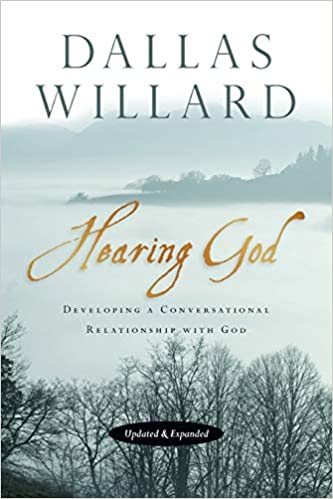
Dallas Willard’s Hearing God: Developing a Conversational Relationship with God has been one of the books that helped me think more carefully about communion with God and His guidance.
I appreciate Willard because his writing can be profound without becoming unnecessarily complicated.
More importantly, he places hearing God within the larger context of knowing God.
That distinction matters.
Christian guidance should never become an obsession with receiving impressions, signs, or private revelations.
Instead, our primary foundation remains Scripture.
We know God’s revealed will through His Word.
At the same time, I believe the Holy Spirit continues to guide believers personally.
Therefore, impressions should be tested rather than automatically treated as God’s voice.
Why This Is One of My Books for Christian Leaders
Leaders frequently make decisions that affect other people.
Consequently, learning to distinguish Scripture, wisdom, personal desire, circumstances, and spiritual impressions is extremely important.
Willard provides useful material for thinking about that relationship.
Read him thoughtfully.
Test everything by Scripture.
Then allow the book to deepen your desire not merely to receive guidance, but to know God Himself.
2. Expository Thoughts on John by J. C. Ryle
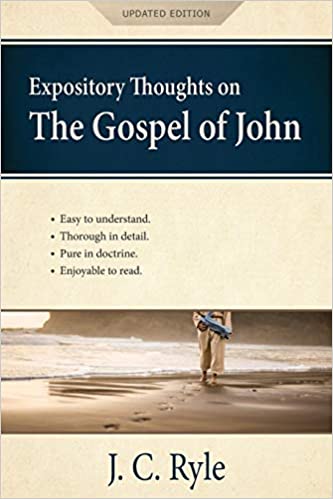
J. C. Ryle has had a profound influence on my spiritual life.
His passion for holiness, biblical truth, and practical Christianity has repeatedly challenged me.
I read his work on John’s Gospel while preparing to teach the Gospel of John to Bible school students.
What I appreciate about Ryle is his ability to explain the text while continually asking:
“What should this truth produce in the believer?”
His writing rarely leaves theology floating in abstraction.
Instead, doctrine moves toward application.
Ryle lived in another century, so readers should expect older language and occasionally older ways of framing issues.
Nevertheless, his central biblical and pastoral insights remain valuable.
Why Christian Leaders Should Read Ryle
Preachers and Bible teachers face a constant danger:
We can study Scripture primarily because we need something to teach other people.
Ryle continually brings the text back toward the reader’s own soul.
That makes his work particularly valuable for Christian leaders.
Before asking:
“What can I preach from this passage?”
we should ask:
“How should this passage change me?”
3. The Attributes of God by A. W. Pink
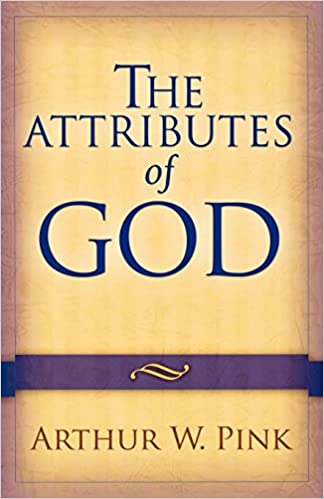
One of the most important things a Christian can study is the character of God.
Who is God?
What does Scripture reveal about His holiness?
Sovereignty?
Knowledge?
Faithfulness?
Power?
Love?
Justice?
A. W. Pink’s The Attributes of God offers a compact introduction to many of these themes.
I have appreciated Pink because he repeatedly directs the reader back to Scripture.
After reading his work, I often find myself wanting to know God more deeply.
That is what good theology should do.
It should not merely enlarge our vocabulary.
Instead, truth about God should produce worship.
Hosea 4:6 is sometimes summarized as saying people perish because they lack information. In context, however, the problem is deeper: God’s people had rejected covenant knowledge and God’s instruction.
Therefore, knowing God includes responding obediently to what He has revealed.
A Christian Leadership Reading List Should Begin With God
Leaders can study communication, organization, influence, productivity, and strategy.
Those subjects have value.
Yet leadership becomes spiritually dangerous when our knowledge of leadership grows faster than our knowledge of God.
Consequently, books about God’s character deserve a permanent place in a Christian leader’s reading life.
4. Bible History by Alfred Edersheim
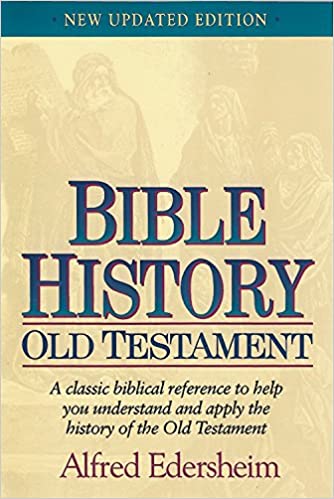
I read Alfred Edersheim while preparing to teach an Old Testament survey course.
His writing helped me think about the biblical story as a connected whole rather than as a collection of unrelated books and events.
Edersheim was born into a Jewish family and later became a Christian minister and scholar.
Therefore, his background makes his work historically interesting.
However, I would not describe one nineteenth-century Christian scholar as giving us simply “the Jewish perspective” on the Old Testament.
Jewish interpretation is far more diverse than that.
Modern archaeology, biblical scholarship, and historical research have also developed significantly since Edersheim wrote.
Still, his work can be valuable when read with those limitations in mind.
A Useful Book for Christian Leaders Who Teach Scripture
Pastors and Bible teachers need more than isolated sermon ideas.
We need to understand the storyline of Scripture.
Creation.
Covenant.
Israel.
Kingdom.
Exile.
Promise.
Messiah.
Redemption.
When we see those connections, individual passages become easier to locate within the larger biblical story.
That is one reason historical and biblical-background resources can be so helpful.
5. The Person and Work of the Holy Spirit by R. A. Torrey
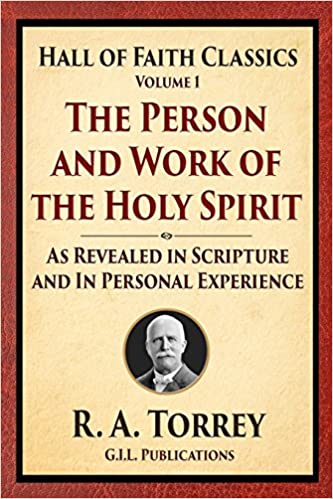
R. A. Torrey’s writings have helped generations of evangelical Christians think about prayer, evangelism, Scripture, and the Holy Spirit.
The Person and Work of the Holy Spirit emphasizes an essential Christian truth:
The Holy Spirit is not merely a force or spiritual influence. He is a divine Person.
That matters enormously.
Christians do not merely seek spiritual power.
We live in relationship with the triune God.
As someone who believes the Holy Spirit continues to work actively in believers today, I value books that encourage Christians to depend upon Him.
However, every theological book—including books written by authors we respect—must remain under the authority of Scripture.
Why This Belongs Among Books for Christian Leaders
Christian ministry cannot be sustained merely through personality, organization, charisma, or human energy.

We need the Holy Spirit.
At the same time, language about the Spirit should remain biblically grounded.
Therefore, read Torrey alongside the relevant biblical texts.
Study John 14–16.
Read Romans 8.
Work carefully through 1 Corinthians 12–14 and Galatians 5.
A good book should send you back to the Bible rather than replace it.
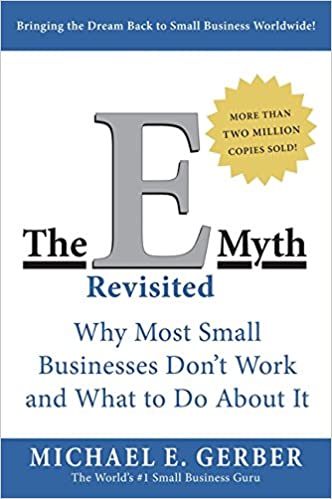
6. The E-Myth Revisited by Michael E. Gerber
Not every valuable book for a Christian leader needs to be a theological book.
Michael Gerber’s The E-Myth Revisited helped me think differently about organizations and systems.
My wife and I have been involved with a dental practice, and Gerber’s ideas helped us think more intentionally about how a small practice can function more effectively.
One of his central insights is the difference between simply doing technical work and building systems that allow an organization to function consistently.
That principle can help business owners.
Interestingly, some aspects may also help leaders think about administration and organizational health.
Nevertheless, the church is not a business.
Pastors are not CEOs in the fullest sense, and people are not products.
Therefore, business principles must never become the controlling theology of church leadership.
Why Christian Leaders Can Learn From Business Books
All truth does not come packaged as a Christian leadership book.
We can learn about:
communication,
systems,
finance,
teamwork,
organization,
and decision-making
from people outside evangelical ministry.
However, we must filter those ideas through Scripture.
Use business wisdom where it genuinely serves people.
Reject it whenever efficiency begins replacing faithfulness.
The goal of Christian leadership is not merely building a successful organization.
It is faithfully serving God and people.
How to Choose Books for Christian Leaders Wisely
Not every popular Christian book deserves your time.
A famous author can still be wrong.
Likewise, an old book is not automatically superior because it is old.
Therefore, I use several questions when evaluating books.
Does this author handle Scripture responsibly?
A book may contain inspiring ideas while interpreting biblical texts poorly.
Does the book make me more impressed with Jesus—or primarily with the author?
Healthy Christian writing should ultimately direct our attention toward God.
Can I distinguish biblical teaching from the author’s opinion?
Every writer makes interpretations.
Do not give a Christian author the authority that belongs to Scripture.
Is this book useful for what I currently need to learn?
A great book at the wrong time may still not be the best next book.
Finally, ask:
“What should I do differently because I read this?”
Reading without application can easily become another form of consumption.
Books for Christian Leaders Should Never Replace the Bible
This is the most important principle in the article.
Read Tozer.
Read Ryle.
Read Pink.
Read Willard.
Read Torrey.
Read good contemporary scholars.
Study leadership.
Learn history.
Explore ideas outside your normal theological circle.
But never allow books about the Bible to replace the Bible itself.
The best Christian authors should make you want to return to Scripture.
Moreover, do not assume an author is correct merely because you deeply respect him.
The Bereans were commended in Acts 17:11 because they examined the Scriptures to determine whether Paul’s message was true.
If the apostolic preaching they heard was examined according to Scripture, certainly modern authors should be tested carefully as well.
Read appreciatively.
Read critically.
Most importantly, read biblically.
Leaders Read—But Leaders Must Also Obey
A person can read fifty books about prayer without developing a life of prayer.
Another can study leadership while treating people poorly.
Someone else may know theology while refusing correction.
Therefore, knowledge alone does not make someone spiritually mature.
“Be doers of the word, and not hearers only…”
That principle should shape our reading.
After finishing a book, ask:
What truth should I practice?
Perhaps you need to change how you pray.
Maybe your understanding of God needs correction.
A leader could discover a better way to prepare sermons.
Another person may need better organizational systems.
The point is not merely finishing another title.
The goal is formation.
Best Books for Christian Leaders: Where Should You Start?
If you want to begin with one book from this list, choose according to what you currently need.
For your relationship with God and guidance:
Dallas Willard — Hearing God
For biblical exposition:
J. C. Ryle — Expository Thoughts on John
For theology:
A. W. Pink — The Attributes of God
For Old Testament background:
Alfred Edersheim — Bible History
For studying the Holy Spirit:
R. A. Torrey — The Person and Work of the Holy Spirit
For organizational thinking:
Michael E. Gerber — The E-Myth Revisited
Then read slowly enough to think.
Take notes.
Compare what you read with Scripture.
Discuss significant ideas with other believers.
Most importantly, apply what is true.
Books for Christian Leaders Can Help Us Remain Teachable
Leaders read books not because reading automatically makes them leaders.
They read because good leaders should remain learners.
Books expose us to people we may never meet.
They force us to consider perspectives we might otherwise ignore.
Sometimes they correct us.
Other times they give language to something we already sensed but could not explain.
Still, the Christian leader’s ultimate goal is not becoming well-read.
It is becoming more like Christ.
Therefore, build your library—but build your character more carefully.
Read widely—but know Scripture more deeply.
Learn from gifted teachers—but follow Jesus above every teacher.
The best books for Christian leaders are ultimately the ones that help us think more clearly, serve more faithfully, love people more deeply, and return to God’s Word with greater hunger.
Continue Reading
For more Christian book recommendations:
For why leaders should develop a reading life:
For studying Scripture:
For learning about the Holy Spirit:

I am a blogger, writer, pastor, Director of Zion Romania Bible School, husband to Olguta, a father and, most importantly, a child of God. I also completed my studies at the King’s University where I earned a B.A. in Theology with a concentration in Messianic Jewish Studies. I love Israel and I love the ‘Jewishness’ of the Bible.

[…] read and continually grow in knowledge. I know great leaders to be avid readers. Of course, reading itself will not make one a prominent leader, but reading […]