
This post may contain affiliate links. If you decide to make a purchase through these links, I earn a small commission at no cost to you. I do not promote anything I do not believe in or stand behind.
What would remain of your faith if speaking about Jesus could cost you your freedom? Richard Wurmbrand faced that question in communist Romania. His answer took shape through imprisonment, painful separation from his family, and a ministry that eventually reached far beyond his country.
Yet his story deserves more than an admiring glance at an unusually courageous man. It invites us to examine what sustains Christian witness: conviction rooted in Christ, compassion for suffering believers, and the difficult command to love our enemies.
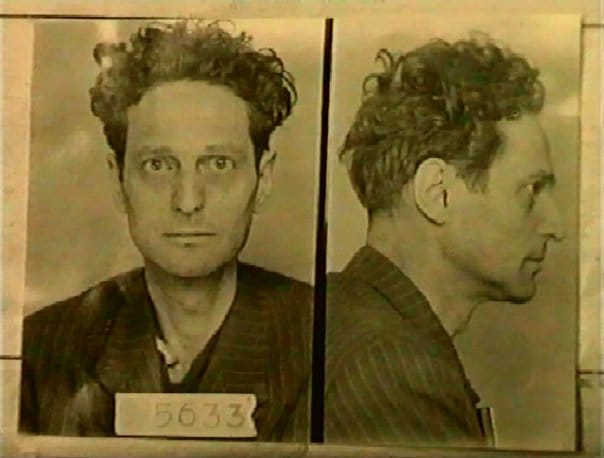
Who was Richard Wurmbrand?
Born in Bucharest in 1909 into a Jewish family, Wurmbrand passed through a period of communist commitment before becoming a Christian. He married Sabina Oster in 1936. Accounts of his conversion describe the influence of a Christian carpenter who gave him a Bible and welcomed him with kindness. Although brief biographies differ over some dates, the central sequence is clear: Christian hospitality and Scripture helped redirect his life. 1
Subsequently, he worked in a mission to Jewish people and became a Protestant minister, associated with Anglican and Lutheran ministry. During the Second World War, his Jewish background exposed him and his family to antisemitic persecution. His Christian identity must therefore be understood alongside that Jewish history, rather than used to erase it. 1
Prison could restrict his movements, but not his calling
After the war, the expanding communist state sought to control religious life. Wurmbrand continued Christian ministry outside the boundaries the authorities permitted. Arrested in 1948, he remained imprisoned until 1956; a second period of imprisonment lasted from 1959 to 1964. The testimony presented to a United States Senate subcommittee records those two periods and his unauthorized ministry between them. 2
According to the organization he later helped establish, his suffering included prolonged solitary confinement and torture. Sabina also endured imprisonment. Consequently, this was a family’s suffering, not simply one preacher’s private ordeal. 3
Such details should never become religious entertainment. Torture degrades human beings; it does not become good because God sustains someone through it. Hebrews 13:3 instead directs the church toward identification with prisoners. Their vulnerability should move us to remembrance, prayer, and practical solidarity.
The week his freedom narrowed again
The interval between Wurmbrand’s two imprisonments is easy to rush past. However, his Senate testimony describes a revealing incident after his first release. He said that the authorities briefly permitted him to preach again, then withdrew that permission after a sermon about patience and the changing course of history. Officials interpreted his language as politically threatening. 2
The episode exposes a difficulty that the phrase “religious freedom” can conceal. A government may permit a building to remain open while reserving the power to decide which hopes can be spoken inside it. Permission to conduct a service is therefore not necessarily freedom to proclaim the Christian message.
In the same testimony, Wurmbrand described clandestine ministry carried out under borrowed names. These details are his retrospective account, rather than a surviving attendance register. Nevertheless, they help us understand why ordinary church activities could become matters of secrecy: recognizing another believer, arranging a meeting, or finding a place to speak could expose several people, not merely the preacher.
Richard Wurmbrand and the battle over credibility
Leaving Romania did not end the struggle over his voice. William Totok’s archival reporting identifies a Securitate report dated January 7, 1970, concerning Wurmbrand’s appearances in West Germany. It refers to a newspaper intervention designed to counter his claims. An unsigned warning against him subsequently appeared on January 15. 6
That warning drew on a German church leader’s rejection of his account of an underground church. Totok supplies an archival reference for the security-service report, allowing the episode to be investigated beyond a general claim that the regime disliked its critics.
The important distinction is between legitimate examination of a witness and a campaign intended to prevent anyone from hearing him. Historical testimony should certainly face questions. Yet questions can also be manipulated to protect an institution’s preferred picture of reality. Reading this episode today, we should resist both automatic credulity and the convenient dismissal of people whose experiences disturb us.
Richard Wurmbrand’s witness reached the world
Following his release, arrangements made by Christians abroad enabled the family to leave Romania in 1965. In May 1966, he appeared before a United States Senate subcommittee. Columbia University’s law-library catalogue independently identifies the hearing as taking place on May 6. 2,4
Public testimony gave an audience to suffering that a closed political system had attempted to conceal. His account also became widely known through Tortured for Christ. Together with Sabina, he helped establish the ministry now known as The Voice of the Martyrs. 3
However, his reception in the West was not uniformly warm. Historical research describes disputes over his anti-communism and the political implications of his testimony. Remembering that contested reception helps us avoid treating the past as a simple story in which everyone immediately recognized what was happening. 5
When church diplomacy met a prisoner’s testimony
A further complication emerges from Timotheus Chang-Whae Kim’s study of the Wurmbrand case. His research places the controversy within West German church debates during the Cold War, when anti-communist campaigning and efforts at dialogue could pull Christians in different directions. 5
This is more revealing than imagining a uniformly sympathetic Western audience. Church leaders could fear that public denunciation would damage relationships or make life harder for believers behind the Iron Curtain. Meanwhile, a former prisoner could regard diplomatic restraint as another layer of silence around the people still suffering.
Those competing concerns do not make every judgment equally sound. They do explain why witness can be costly even after the prison door opens. A survivor may discover that an audience welcomes his perseverance more readily than the uncomfortable implications of his account. Wurmbrand’s Western ministry consequently belongs to the history of Christian disagreement as well as the history of persecution.
An operation conducted through respectable voices
The published abstract of Gabriel Stelian Manea’s archival study describes another effort, this time in Britain between 1967 and 1969. Drawing on Romanian intelligence files, the study argues that the Securitate sought to influence church discussion through apparently credible intermediaries, religious publications, and organized clergy visits. Only the abstract, not the full article, was available for this account. 7
Its significance lies in the method described. Propaganda does not always announce itself in the vocabulary of a dictatorship. Sometimes it travels through familiar institutions and people who appear to possess independent authority.
That observation also sets a limit on our conclusions: this evidence does not justify labeling every critic of Wurmbrand an intelligence agent. Rather, it requires patient attention to particular documents, relationships, and claims. A responsible Christian remembrance should defend truth without reproducing the habits of accusation that made the original persecution possible. Honoring a witness and checking a witness belong together.
Conviction and love belong together
Wurmbrand’s ministry emphasized support for persecuted Christians and love for their persecutors. The organization he co-founded still describes those convictions as central to the founders’ message. 3
Jesus gives the deeper foundation in Matthew 5:43–48. His command to love enemies challenges the instinct to let another person’s cruelty determine our character. Nevertheless, loving an enemy does not require denying abuse, concealing a crime, or abandoning protection for those at risk.
Likewise, Romans 12:17–21 calls Christians away from personal revenge. God’s justice frees us to pursue truthful, merciful action without making hatred our permanent home. Forgiveness and accountability can therefore belong in the same Christian response.
For a fuller biblical discussion, read what biblical forgiveness means—and what it does not mean.
Courage grows through dependence on Christ
It is tempting to read a biography like this and conclude that faithful Christians possess exceptional inner strength. Scripture directs our attention elsewhere. In John 15:5, Jesus describes fruitfulness as the result of remaining in Him.
Therefore, the question is not whether we can imagine surviving everything Wurmbrand survived. Consider instead whether we are learning to depend on Christ in the responsibilities already before us. Honest speech, patient prayer, costly generosity, and loyalty to a struggling believer form habits of obedience.
Moreover, Christian courage must not be confused with a combative personality. Someone can enjoy confrontation and still lack love. Another person may tremble while speaking the truth and yet act faithfully. The Holy Spirit’s fruit includes both faithfulness and gentleness, as Galatians 5:22–23 reminds us.
Remember the person, examine the sources
Wurmbrand died in 2001. His enduring significance lies partly in helping distant Christians recognize persecuted believers as members of the same spiritual family. 3
Historical care strengthens that remembrance. Autobiographical experiences should be identified as testimony; institutional biographies should be compared with independent records. Small chronological differences need checking, while dramatic stories should never be embellished for an emotional effect.
Similarly, admiration need not turn into agreement with every statement a Christian leader ever made. Hebrews 12:1–3 directs us through the examples of faith toward Jesus Himself. Christ remains the center and measure of Christian discipleship.
A practical response this week
Choose one trustworthy report about a persecuted Christian community and pray specifically for its people. Then consider a practical way to support them through an accountable ministry.
Also identify one situation in which fear is tempting you to hide your allegiance to Jesus. Ask a mature believer to pray with you about a wise, gracious response.
Finally, share this story with someone who needs encouragement to remain faithful. Wurmbrand’s life raises a question worth carrying into ordinary days: Will my love for Christ also teach me to love the people for whom obedience is costly?
Sources and further reading
1. Richard Wurmbrand College, historical biography
2. Richard Wurmbrand’s 1966 Senate testimony, reproduced transcript
3. The Voice of the Martyrs, Our Founders
4. Columbia Law Library, official hearing catalogue record
5. Timotheus Chang-Whae Kim, The Richard Wurmbrand Case, International Journal for Religious Freedom
6. William Totok, archival investigation of the campaign against Wurmbrand, Radio Free Europe (2014)
This article was prepared with the assistance of AI for research, translation, and writing. The content was reviewed and edited by Onisim Moisa.

I am a blogger, writer, pastor, Director of Zion Romania Bible School, husband to Olguta, a father and, most importantly, a child of God. I also completed my studies at the King’s University where I earned a B.A. in Theology with a concentration in Messianic Jewish Studies. I love Israel and I love the ‘Jewishness’ of the Bible.


Leave a Reply