
This post may contain affiliate links. If you decide to make a purchase through these links, I earn a small commission at no cost to you. I do not promote anything I do not believe in or stand behind.
A missionary’s name. A Russian religious community. Then, a footnote about a school beside the Danube. These fragments brought me to the question of Molokans and Pentecostal origins.
Could these fragments point to a charismatic movement on the territory of present-day Romania before its familiar Pentecostal beginnings?
The possibility deserves attention. However, a fascinating possibility can become a confident story long before anyone finds the missing evidence.
As Christians, we have reasons to care about both spiritual renewal and historical honesty. We want to recognize God’s work. At the same time, we should resist giving our preferred explanation more certainty than the documents allow.
This article began when a Pentecostal brother researching the history of Pentecostalism in Bulgaria contacted me about my book. We exchanged emails, documents, and questions about Flocken, the Molokans, and possible earlier charismatic experiences in the region.
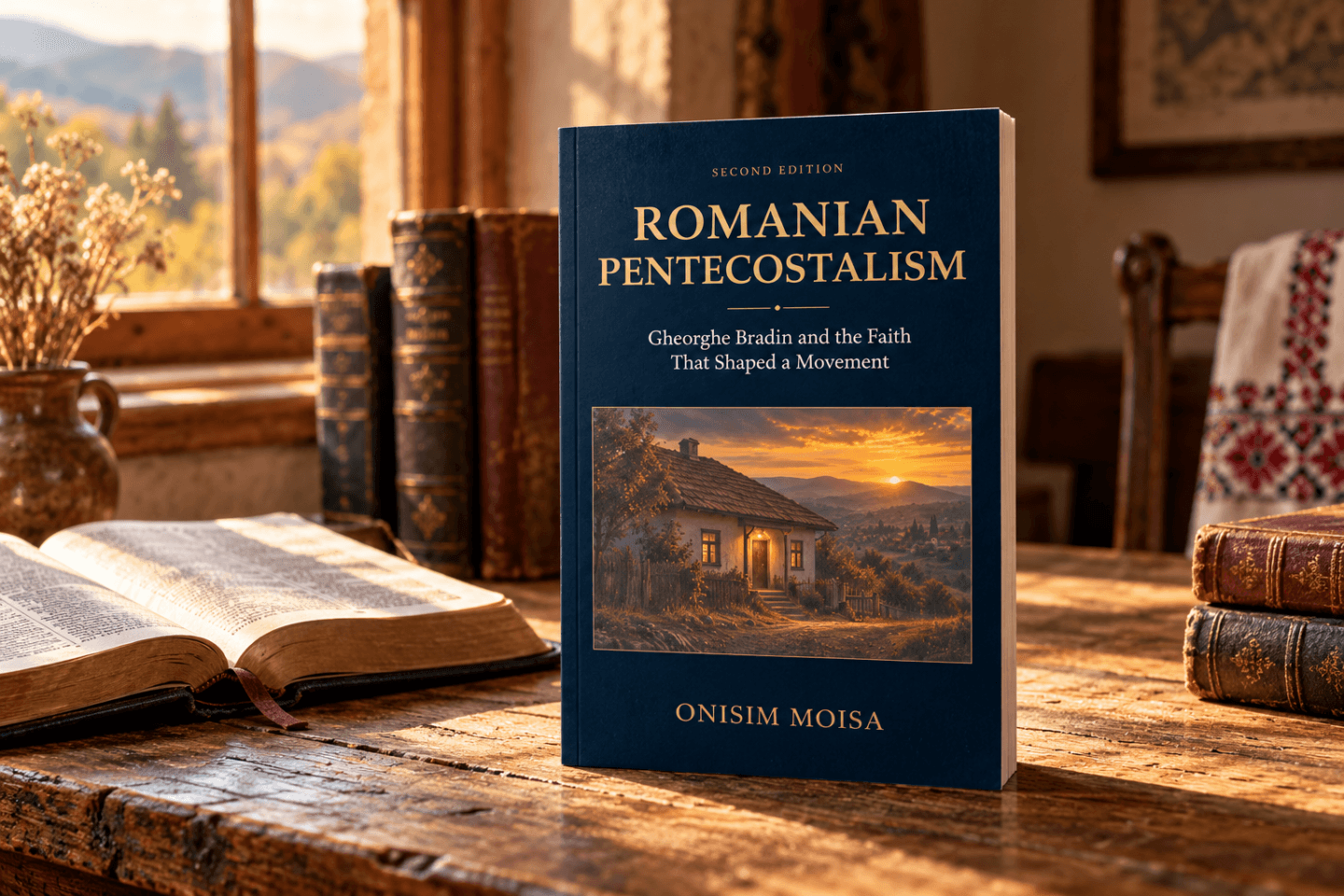
My book, Romanian Pentecostalism, grew from a research paper I wrote while studying theology at The King’s University. It combines historical discussion with spiritual lessons rather than offering an exhaustive academic history. This particular question invites a closer investigation—and a lesson in how faith can welcome careful inquiry.
The Limited Sources Behind This Inquiry
This is a preliminary inquiry based on a small selection of published materials, not a comprehensive archival study. Its principal sources are:
- Irina F. Makarova, “Between Russia and the Balkans: Molokans in the Migration Flows of the 1860s,” Slavianovedenie, no. 4 (2013), pp. 25–39, especially p. 30.
- Baylor University’s Soviet Union Pryguny Subject Files finding aid, whose historical introduction draws on J. Eugene Clay.
- The Internet Encyclopedia of Ukraine entry “Molokans.”
- The British Library Endangered Archives Programme’s EAP1145 survey report, Documentary Heritage of the Traditional Protestant Communities in Bulgaria (2018–2019).
- The Romanian Pentecostal denomination’s published historical account, supplemented by local historical overviews for Tulcea’s setting.
These sources are linked where discussed below. I have not independently examined the nineteenth-century archival originals cited by Makarova. Although our correspondence also included a cover photograph of Mykhaylo Mokiyenko’s History of Pentecostalism in Ukraine, a cover cannot establish the book’s arguments; I do not use it as evidence here.
Why Molokans and Pentecostal Origins Raise Questions
Suppose we discover that a nineteenth-century community practiced speaking in tongues. Would that make its members Pentecostals?
Before answering, we need to distinguish three things.
Glossolalia means speaking in tongues. Identifying a report of that practice is one historical task.
Charismatic practice, as used here, describes experiences understood as spiritual gifts, such as prophecy or tongues. The word does not automatically place a community within the later movement commonly called the Charismatic Renewal.
Pentecostalism, in the historical sense relevant here, refers to a modern Christian movement with identifiable teachings, communities, and relationships.
Therefore, a shared practice does not establish shared movement membership. Nor does it prove that one community passed its beliefs to another.
Imagine two churches singing the same hymn. That resemblance raises questions about influence. However, it does not tell us who taught whom, when they met, or whether both learned it elsewhere.
Likewise, the historical question requires more than resemblance. We need evidence connecting the people, their beliefs, and their practices.
Tulcea Belonged to a Different Political World
During the period under discussion in the 1860s, Tulcea belonged to the Ottoman Empire. It was neither part of the Romanian state nor a sovereign Bulgarian state. Northern Dobruja, including Tulcea, entered Romania in 1878. The Tulcea County Council’s historical overview provides this broader setting.
Consequently, “an early movement in Romania” needs careful wording. For this investigation, we mean a possible movement on territory that is now Romanian.
That distinction prevents us from placing modern borders over an earlier world.
Tulcea also brought together different peoples and languages. Its local historical overview describes Russian-speaking communities, Bulgarians, Germans, Greeks, Jews, Armenians, and others.
Russian could therefore help a missionary communicate with Russian-speaking residents. German could help with German-speaking contacts. These are reasonable practical inferences from the town’s population, rather than proof that every resident spoke either language.
Moreover, a multilingual town offered opportunities for religious exchange. Opportunities, however, tell us where to investigate; they do not tell us what happened in a particular prayer meeting.
Who Were the Russian Molokans?
The Molokans belonged to the world of Russian religious dissent, often discussed under the broader category of Spiritual Christians. Their history developed outside the structures of Russian Orthodoxy.
The Internet Encyclopedia of Ukraine describes a movement emphasizing Bible reading and prayer meetings while rejecting Orthodox sacramental and ritual practices. It also traces communities across several regions of the Russian Empire.
However, “Molokan” should not suggest one completely uniform community.
Baylor University’s historical description of the Pryguny, or “Jumpers,” identifies a movement emerging from the Molokans in the nineteenth century. Drawing on historian J. Eugene Clay, it associates these groups with prophecy, ecstatic worship, and glossolalia.
This makes comparison with charismatic Christianity a legitimate subject for research.
Nevertheless, a description of the Pryguny cannot automatically describe every Molokan congregation. We must establish which community a source discusses, where its members lived, and when the reported practice occurred.
Otherwise, a broad religious label can hide precisely the differences we need to understand.
What Frederick Flocken’s Tulcea Connection Establishes
Frederick Flocken appears in this story as a Methodist missionary associated with a school in Tulcea.
Historian Irina Makarova’s article, “Between Russia and the Balkans: Molokans in the Migration Flows of the 1860s”, examines migration through reports preserved in Russian archives.
On printed page 30, she describes an 1865 report naming Ivan Ivanovich, a Molokan local council member who taught at Flocken’s school. He also served as an intermediary in obtaining Ottoman passports. Her reference is RGVIA, fond 450, file 67, folio 298 verso.
These details support educational contact and practical cooperation. However, the article does not document tongues among Tulcea’s Molokans.
Because its subject is migration, that silence cannot establish that tongues were absent. Equally, it cannot supply evidence that they were present.
For now, the school connection provides a promising research lead. It does not establish a Pentecostal congregation or a route through which glossolalia reached Romania.
Three Levels of Evidence for Molokans and Pentecostal Origins
We can now organize the question without forcing an answer.
| Level | What the evidence supports | What remains unestablished |
|---|---|---|
| Documented local contact | Molokan contact with Flocken’s Methodist school in Tulcea | That these contacts involved tongues |
| Reported practices elsewhere | Glossolalia associated with particular Molokan-related communities | That Tulcea shared those practices |
| Proposed historical connection | A question worth investigating | Direct transmission into later Romanian or Bulgarian Pentecostalism |
The difference between these levels matters because a chain of plausible statements can still contain an unsupported link.
For example: a community had travelling members; another related community practiced tongues; a missionary knew someone from the first community. None of those facts, alone or together, identifies the practice of the first community.
Furthermore, even a verified Tulcea report would leave another question open: did that experience influence a later movement?
A local occurrence and a line of historical transmission require different evidence. Therefore, we should welcome a discovery without asking it to prove more than it actually establishes.
What Romania and Bulgaria Add to the Picture
Romania’s Pentecostal beginnings have their own documentary story. The Romanian Pentecostal denomination’s historical account places Gheorghe and Persida Bradin at the center of the Păuliș beginnings in 1922 and describes contact with Pentecostal material from the United States.
For a broader introduction, see my article on Romanian Pentecostal history and its lessons for today.
Meanwhile, a British Library Endangered Archives Programme survey places Ivan Voronaev and Dionisii Zaplishnii in Bulgaria’s early Pentecostal mission in 1920. It also highlights Olga Zaplishnii’s Bulgarian background and the importance of Burgas.
These accounts point toward identifiable people and missionary connections. They should not be replaced by an earlier-origin theory without corresponding evidence.
At the same time, the founding date of a congregation does not prove that nobody in the region previously encountered similar teaching or experiences.
Consequently, “When did organized churches emerge?” and “Were there earlier charismatic experiences?” remain separate questions. Their answers may overlap, but one cannot simply substitute for the other.
What Would Strengthen the Historical Case?
A stronger case would begin with a dated source describing a particular Tulcea community.
For example, a missionary letter might name participants and describe their worship. A community record might explain how members understood tongues. An official report could preserve useful information, although we would need to consider the observer’s knowledge and possible hostility.
Next, researchers would need to check what the original language actually says. Descriptions of unusual singing, emotional prayer, or “inspired speech” should not automatically become glossolalia in translation.
To demonstrate influence on later Pentecostalism, we would then need a further connection: correspondence, named teachers, visits, or testimony linking earlier practices to later believers.
Moreover, several books repeating one account do not create several independent witnesses.
The most productive approach is therefore modest and concrete: identify the earliest relevant document, examine its wording, and trace each proposed connection separately.
That work may confirm a hypothesis, narrow it, or leave it unresolved. Each outcome can improve our understanding.
Scripture Calls Us to Openness and Discernment
This history also raises a personal question: how do we respond when an exciting spiritual claim reaches us?
In 1 Thessalonians 5:19–22, Paul places respect for the Spirit’s work alongside the testing of what is presented to the church. He warns against despising prophecy, while also calling believers to examine and retain what is good.
Although this passage is not a manual for archival research, its pattern challenges both careless acceptance and automatic dismissal.
Similarly, 1 Corinthians 12–14 addresses spiritual gifts within the life of the church. Paul emphasizes the common good, the necessity of love, and worship that builds others up.
Therefore, an unusual experience should never end our questions about teaching, character, and the community’s life.
As a Christian man, you can ask whether your desire for spiritual experience is accompanied by a willingness to serve, repent, and listen. Openness to God and humility before the truth belong together.
Neither historical enthusiasm nor spiritual excitement removes our responsibility to exercise discernment.
Seek the Spirit’s Work in Ordinary Obedience
Perhaps you have heard a powerful testimony and wondered why your own Christian life feels less remarkable.
However, your acceptance before God does not depend on possessing an impressive experience. Ephesians 2:8–10 grounds salvation in God’s grace through faith, while also describing the good works for which believers are created in Christ.
Because Christ is the foundation of our acceptance, we can face both our sins and our limitations honestly.
You may need to confess a hidden habit, seek help from a mature believer, or repair damage caused by your anger. These steps do not earn forgiveness. Instead, they express repentance and dependence on the Savior who died and rose again.
Furthermore, Galatians 5:16–25 describes an ongoing conflict between sinful desire and life by the Spirit. Christian growth involves learning to walk by the Spirit, whose fruit includes love, patience, faithfulness, and self-control.
Pray for God’s gifts, and remain willing to obey him in the responsibilities already before you. A truthful word, a repaired relationship, and patient service also matter deeply.
Molokans and Pentecostal Origins Call for Honest Inquiry
We began with a missionary, a community, and a footnote.
The question of Molokans and Pentecostal origins remains worth investigating. There is evidence of local contact, and there are reports of charismatic practices elsewhere. However, the sources examined here do not establish glossolalia among Tulcea’s Molokans or their direct influence on later Pentecostal churches.
We can leave that question open without becoming spiritually indifferent. Our hope rests in Christ, whose saving work does not depend on our ability to construct an unbroken history of remarkable experiences.
Before sharing your next striking claim about revival, take one practical step: locate the source and distinguish what it establishes from what you hope it means.
Then ask God for a heart that welcomes his work and loves the truth enough to speak carefully.
The footnote may lead to another discovery. Until then, faithfulness includes knowing where the evidence ends.

I am a blogger, writer, pastor, Director of Zion Romania Bible School, husband to Olguta, a father and, most importantly, a child of God. I also completed my studies at the King’s University where I earned a B.A. in Theology with a concentration in Messianic Jewish Studies. I love Israel and I love the ‘Jewishness’ of the Bible.

Leave a Reply