
This post may contain affiliate links. If you decide to make a purchase through these links, I earn a small commission at no cost to you. I do not promote anything I do not believe in or stand behind.
Romanian Pentecostal history invites us to consider how faith takes root, survives opposition, and passes from one generation to another.
Behind the names and dates are people who prayed, read Scripture, welcomed others into their homes, and made difficult decisions. Their experiences raise questions that still matter for Christians today.
As a pastor, I want to understand this history with both gratitude and honesty. We can appreciate the courage of earlier believers while also examining their struggles and limitations.
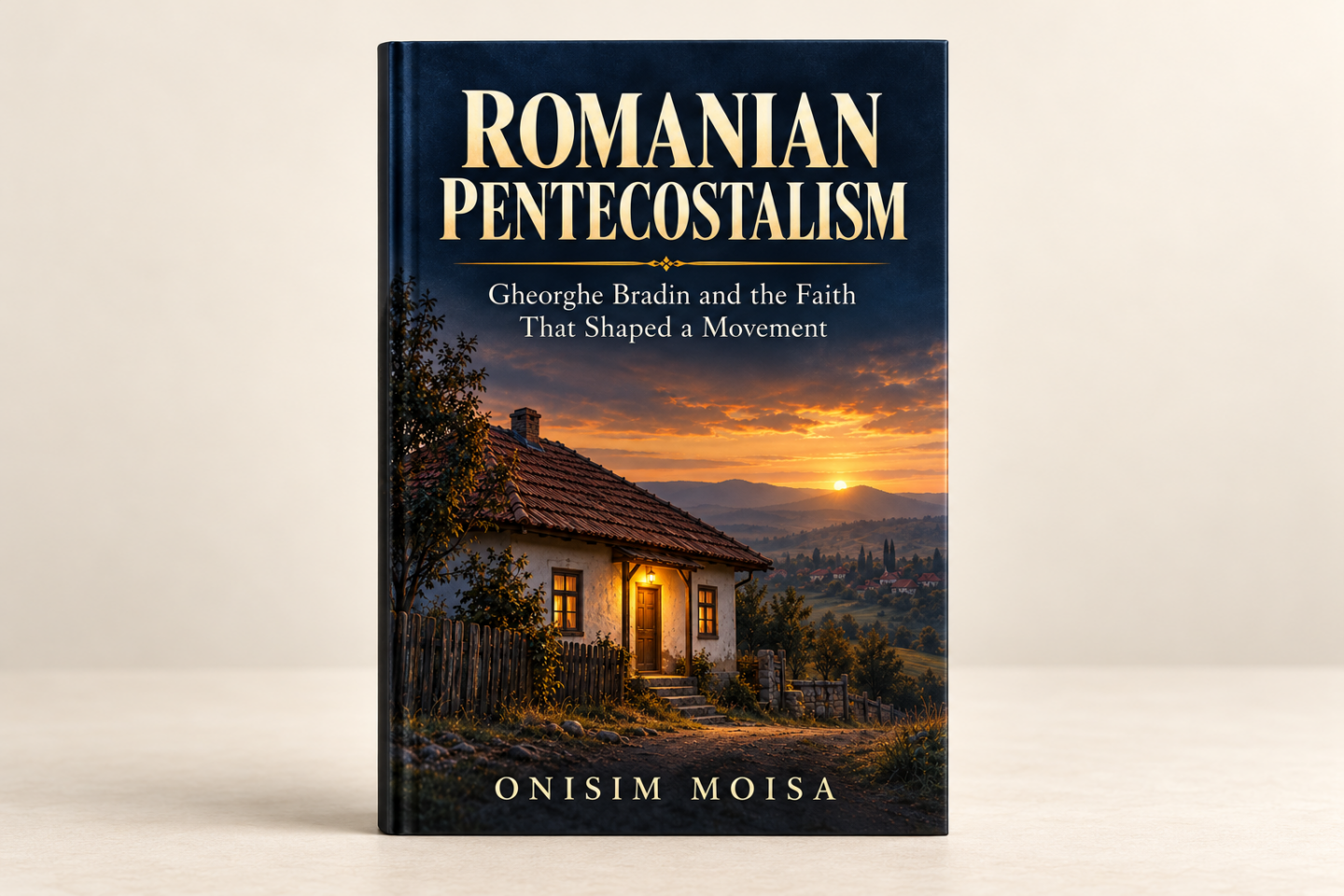
In my book, Romanian Pentecostalism: Gheorghe Bradin and the Faith That Shaped a Movement, I explore these beginnings and their continuing significance. Here, I want to share several lessons that make this story worth reading.
Romanian Pentecostal History Is a Story of People
Gheorghe Bradin has a central place in the story explored in my book. However, understanding a movement requires us to look beyond its most familiar name.
Persida Bradin also belongs in this account, alongside the families, fellow believers, and congregations who helped shape its development.
For that reason, I approach church history as the story of a community. Leaders matter, but their work takes place within networks of relationships, shared convictions, and practical support.
This perspective also changes how we view our own churches. A congregation’s life depends on many contributions that rarely receive public attention.
For example, someone opens a home, encourages a struggling believer, or faithfully prays for others. Such acts may seem small, yet they form part of a church’s enduring witness.
Faith Travels Through Relationships
The early Romanian Pentecostal story also involves connections beyond Romania.
Letters, migration, and contact with believers abroad helped Pentecostal teaching and testimonies travel. Consequently, local developments belonged to a wider network of Christian relationships.
That connection between the local and the international deserves attention. Churches learn from others, but they must also consider how teaching and practices relate to their own circumstances.
Today, ideas move much faster through videos, messages, and social media. Nevertheless, speed does not remove the need for discernment.
Before adopting an appealing teaching, we should ask how it relates to Scripture. We also need to consider its fruit in the life of a Christian community.
Relationships can carry encouragement and insight. Therefore, they should also make room for careful questions and responsible learning.
Courage Matters When Faith Becomes Costly
Opposition and persecution form an important part of Romanian Pentecostal history.
Studying these experiences reminds me that Christian conviction can carry a real cost. However, I want to be careful about speaking too easily of suffering that others endured.
Historical accounts deserve patience. We need to consider the circumstances people faced before making confident judgments about their choices.
At the same time, their perseverance challenges our own priorities. Following Jesus involves faithfulness when obedience becomes inconvenient, misunderstood, or difficult.
Hebrews 12:1–3 directs believers toward endurance by fixing their attention on Jesus. That emphasis helps me keep historical examples in their proper place.
Earlier Christians can encourage us. Ultimately, however, Christ remains the one we follow and the source of our hope.
Romanian Pentecostal History Raises Questions About Leadership
Growing movements face decisions about authority, organization, disagreement, and relationships with public institutions.
These questions make church history especially valuable for pastors and ministry leaders. They reveal that leadership involves more than communicating an inspiring message.
For example, leaders must decide how to respond to criticism and how to handle differences within a community. They also need to consider the consequences of decisions made under pressure.
Rather than assuming that every historical choice provides a model to copy, I want to examine the reasons behind it.
First Peter 5:2–3 describes leadership in terms of willing service and example rather than domination. That biblical standard should shape how we assess both past and present leaders.
Accordingly, remembering a respected figure should never remove the need for accountability. Gratitude and honest evaluation can belong together.
Spiritual Expectation Needs Biblical Discernment
Prayer, worship, healing testimonies, and convictions about the Holy Spirit are important themes in the movement’s story.
As I explore them, I want to take believers’ experiences seriously while keeping Scripture central. Neither enthusiasm nor skepticism should replace careful examination.
First Thessalonians 5:19–22 brings spiritual openness and discernment into the same passage. Paul warns against quenching the Spirit while also calling believers to test what they receive and hold fast to what is good.
Therefore, I do not see biblical discernment as an enemy of spiritual vitality. It helps a community pursue faithfulness with greater care.
Similarly, discussions of healing should leave room for compassion toward people who continue to suffer. Historical testimonies should never become a reason to blame someone whose circumstances have not changed.
A Spirit-shaped community needs truthfulness, patience, and love alongside its expectation of God’s work.
Learning from Romanian Pentecostal History Today
Learning Romanian Pentecostal history should help us ask better questions about our own discipleship.
What convictions guide our decisions? How do we treat people who disagree with us? Are we passing on a living faith that younger believers can understand and practice?
These questions move historical reading toward personal responsibility.
However, honoring an inheritance does not mean repeating every practice without reflection. Faithfulness requires us to distinguish biblical convictions from habits shaped by a particular time and place.
Likewise, acknowledging weaknesses does not require dismissing everything earlier generations contributed. We can learn from both their courage and their mistakes.
My hope is that this kind of reading will encourage gratitude without idealization and reflection without contempt.
Why I Wrote Romanian Pentecostalism
I wrote Romanian Pentecostalism: Gheorghe Bradin and the Faith That Shaped a Movement to explore this history and its questions more fully.
Across eighteen chapters, I consider the movement’s beginnings, development, beliefs, and continuing legacy. Along the way, I bring historical exploration into conversation with biblical and pastoral reflection.
The book also includes a historical timeline, a glossary, and a bibliography. These resources help readers follow the story and pursue further study.
In addition, a six-session reading guide provides a starting point for personal reflection or group discussion. A church group can use it to consider how historical lessons relate to its own responsibilities.
Explore Romanian Pentecostalism and find the book on Amazon.
An Invitation to Learn with Humility
You do not need to come from a Romanian or Pentecostal background to engage with this story.
Its questions about courage, leadership, community, and spiritual discernment reach beyond one country or tradition. Nevertheless, understanding its particular setting helps us avoid drawing careless comparisons.
As you read, look for people as well as ideas. Consider the pressures they faced, the convictions they held, and the relationships that sustained them.
Above all, let the study of history lead you back to Jesus.
What might you learn from earlier believers that would help you serve your church more faithfully today?
Explore my other books on Scripture, spiritual growth, and Christian history.

I am a blogger, writer, pastor, Director of Zion Romania Bible School, husband to Olguta, a father and, most importantly, a child of God. I also completed my studies at the King’s University where I earned a B.A. in Theology with a concentration in Messianic Jewish Studies. I love Israel and I love the ‘Jewishness’ of the Bible.

Leave a Reply