
This post may contain affiliate links. If you decide to make a purchase through these links, I earn a small commission at no cost to you. I do not promote anything I do not believe in or stand behind.
God’s promise to Israel raises a question that many Christians find difficult: does the land still matter after the coming of Jesus?
For some readers, the answer seems obvious. For others, the inclusion of the nations and the promise of a new creation suggest that the land no longer has a distinct place in God’s purposes.
As a pastor and a student of Scripture, I believe this question deserves careful attention. However, it also requires humility, especially when biblical convictions meet the suffering and disagreements of the present.
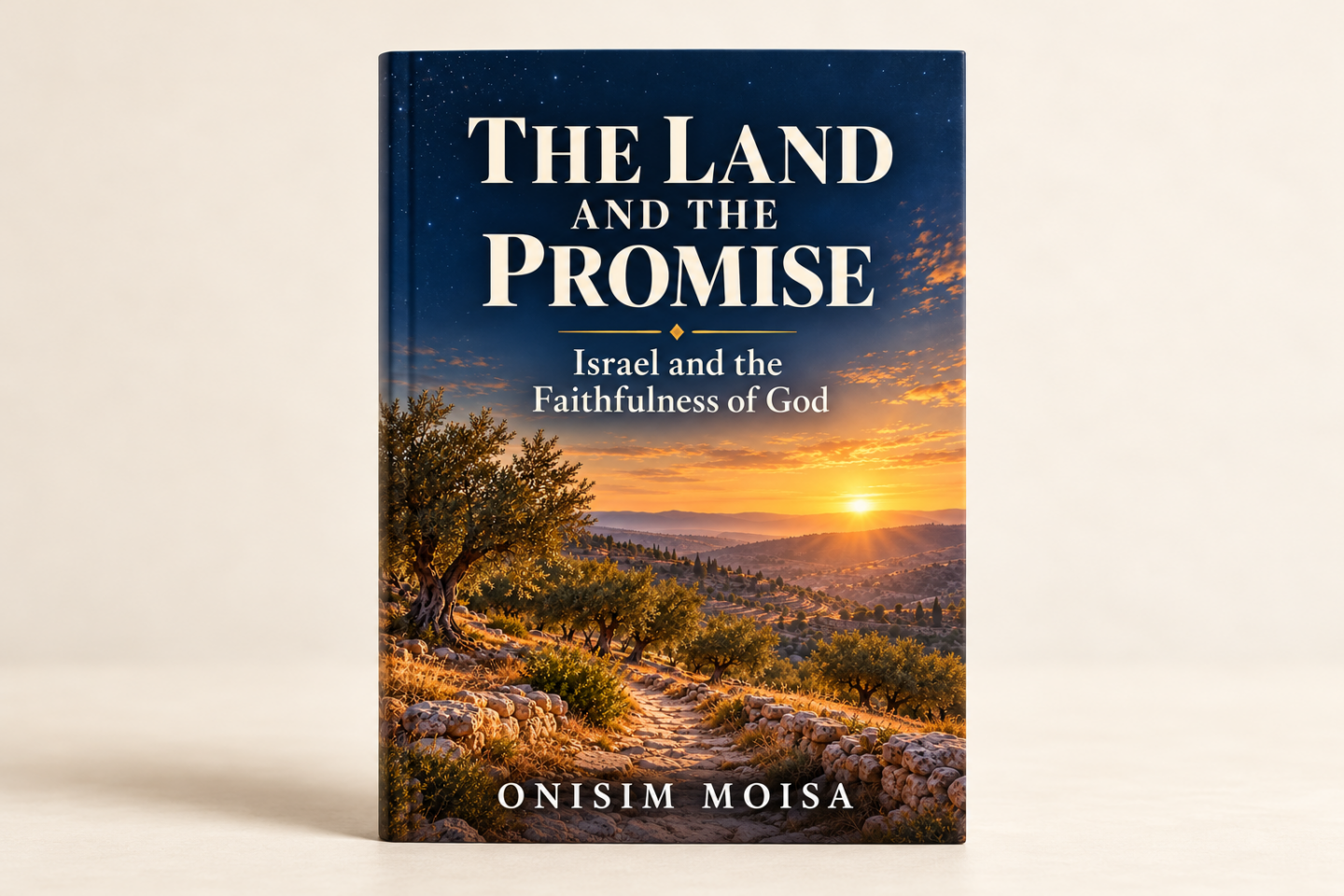
In my book, The Land and the Promise: Israel and the Faithfulness of God, I explain why I believe the land retains covenant significance for the Jewish people. Here, I want to introduce several convictions that guide my approach.
God’s Promise to Israel Begins with a Covenant
The biblical discussion begins with God’s call to Abraham. In Genesis 12:1–3, the Lord connects his calling with a land, a people, and blessing that will reach the families of the earth.
Later, Genesis 15:18 places the promise of the land explicitly within a covenant. Genesis 17:7–8 also connects that promise with Abraham’s descendants and their relationship with God.
Therefore, I do not approach the land simply as a geographical detail. It belongs to the unfolding account of God’s faithfulness.
At the same time, the blessing of the nations is present from the beginning. God’s particular dealings with Abraham’s family serve a purpose that reaches beyond that family.
Holding these themes together helps us avoid reading Israel’s story in isolation from God’s concern for the world.
Fulfillment, Exile, and Restoration Belong Together
Joshua 21:43–45 celebrates the Lord’s faithfulness in giving Israel the land and rest. These verses deserve their full weight: God kept his word.
Yet the biblical story continues. Israel’s life in the land involved covenant responsibilities, and the Scriptures also describe judgment, exile, and promises of restoration.
For example, Deuteronomy 30:1–5 looks beyond scattering toward a return. The prophets likewise speak about restoration while confronting injustice and unfaithfulness.
Consequently, I read Joshua alongside the rest of Scripture. I understand the fulfillment described there as real, while also asking how later promises contribute to the larger picture.
This approach requires more than selecting one passage. Instead, it invites us to follow the relationship between promise, fulfillment, judgment, and hope across the biblical narrative.
Jesus and God’s Promise to Israel
Any Christian discussion of Israel must take the person and work of Jesus seriously.
Galatians 3:16 directs our attention to Christ in its discussion of Abraham’s offspring. Furthermore, Galatians 3:26–29 explains how those who belong to Christ share in Abraham’s inheritance.
These truths are central to my reading. Gentile believers are welcomed into the blessing of Abraham through Jesus.
However, I do not understand that inclusion as automatically cancelling every particular promise concerning Israel. That conclusion needs to be examined through the wider testimony of Scripture.
Equally, covenant significance must never be confused with a separate means of salvation. Jews and Gentiles alike need the grace of God revealed in Christ.
The question of the land therefore belongs within a Christ-centered understanding of Scripture.
God’s Promise to Israel Calls for Humility
In Romans 11:1–2, Paul rejects the suggestion that God has simply rejected his people. Later, his olive-tree illustration warns Gentile believers against arrogance toward the branches.

For me, that warning has an immediate application. Whatever conclusions we reach about Israel, pride is an inappropriate response.
Nevertheless, Romans 11 is not a map of modern borders. Its teaching about God’s faithfulness should not be made to answer political questions that require additional historical and moral judgment.
Instead, the chapter encourages gratitude, reverence, and humility. Gentile inclusion gives us reasons to marvel at God’s mercy.
It also reminds us to speak carefully about the Jewish people and to reject contempt.
Biblical Conviction Must Produce Compassion
Believing that the land retains covenant significance does not mean approving every action of the modern State of Israel.
Questions about government policy, military conduct, property, and citizenship require careful consideration. They cannot be settled merely by attaching a biblical verse to a contemporary claim.
Likewise, compassion for Palestinians should never require hostility toward Jewish people. Concern for Jewish safety should not make us indifferent to Palestinian suffering.
Palestinian Christians are also our brothers and sisters in Christ. Their lives, prayers, and experiences belong within our concern for the wider church.
Therefore, I want my convictions to produce responsible speech, prayer, and love for my neighbors. We should be able to acknowledge suffering without turning people into symbols in an argument.
Following Jesus calls us to truthfulness and compassion together.
Why I Wrote The Land and the Promise
I wrote this book to explore these questions more fully and explain the biblical reasoning behind my position.
Rather than offering a timetable for the end times, I follow the story from Abraham through Israel’s history, the prophets, Jesus, and Paul. Along the way, I consider interpretations that differ from my own.
My aim is to help readers examine the Scriptures carefully while keeping Christ at the center. Moreover, I want that study to encourage humility and faithful discipleship.
The book includes nine chapters, followed by notes and a bibliography for further study. Its themes include the covenant, judgment and restoration, Joshua, the nations, and the practical implications of these convictions.
Explore The Land and the Promise.
A Brazilian Portuguese edition is also available: A Terra e a Promessa.
An Invitation to Read Carefully
You may share my understanding of the land, or you may approach these passages differently. Either way, I invite you to examine the biblical argument with patience.
Before asking how a passage supports our position, we should ask what it says in its context. Then we can consider how it contributes to the wider witness of Scripture.
Above all, studying God’s faithfulness should deepen our trust in him and shape the way we treat others.
As you reflect on these promises, ask yourself: is my understanding leading me toward greater humility, love for my neighbors, and faithfulness to Jesus?

I am a blogger, writer, pastor, Director of Zion Romania Bible School, husband to Olguta, a father and, most importantly, a child of God. I also completed my studies at the King’s University where I earned a B.A. in Theology with a concentration in Messianic Jewish Studies. I love Israel and I love the ‘Jewishness’ of the Bible.

Leave a Reply