
This post may contain affiliate links. If you decide to make a purchase through these links, I earn a small commission at no cost to you. I do not promote anything I do not believe in or stand behind.
What evidence for the resurrection of Jesus would you give if someone asked you why you believe Christ is alive?
Years ago, while I was in India, I had a conversation with a Hindu man in the city of Jeypore.
I shared the gospel with him. Moreover, I told him about Jesus’ birth, His sinless life, His crucifixion, burial, resurrection, and ascension.
Then he asked me a simple question:
“How do you know Jesus rose from the dead?”
His question caught me somewhat unprepared.
However, it was exactly the kind of question every Christian should eventually learn to answer.
Christian faith does not rest upon the vague idea that Jesus somehow continued spiritually after death. Instead, the New Testament makes a much stronger claim:
Jesus of Nazareth was crucified, died, was buried, and then bodily rose from the dead.
Therefore, if Christ did not rise, Christianity collapses.
Paul says in 1 Corinthians 15:17:
“If Christ has not been raised, your faith is futile and you are still in your sins.”
So, why do Christians believe He rose?
Here are seven reasons.
Why Evidence for the Resurrection of Jesus Matters
The resurrection is not an optional appendix to Christianity.
Moreover, Paul places it at the center of the gospel he preached.
First Corinthians 15:3–4 says:
“Christ died for our sins in accordance with the Scriptures, that he was buried, that he was raised on the third day…”
Therefore, Christianity is tied to a claim about something God did in history.
Of course, historical arguments cannot force anyone to believe.
Likewise, no collection of facts can replace the work of the Holy Spirit.
However, Christians are still called to give reasons for their hope.
First Peter 3:15 tells believers to be ready to give an answer.
Consequently, trusting the Spirit and thinking carefully are not opposites.
We can pray and reason.
We can depend upon God and examine evidence.
1. The Earliest Evidence for the Resurrection of Jesus Comes From Apostolic Testimony
One of the most important resurrection passages appears in 1 Corinthians 15.
Paul reminds the Corinthians of a message he had previously received and passed on:
“Christ died for our sins… he was buried… he was raised on the third day…”
Then Paul lists appearances to:
Cephas,
the Twelve,
more than five hundred brothers and sisters,
James,
all the apostles,
and finally Paul himself.
Importantly, Paul is not inventing Christianity decades later.
Instead, he says he received and delivered this message.
Therefore, resurrection proclamation belongs to the earliest layers of Christian faith.
The first Christians did not gradually transform Jesus into a risen Messiah after centuries of legend.
From the beginning, they proclaimed:
Jesus died and God raised Him.
The Resurrection Was Part of the Gospel From the Beginning
Acts presents the resurrection at the center of apostolic preaching.
Peter proclaims it.
Moreover, Paul preaches it.
The apostles do not merely tell people:
“Jesus was a wonderful moral teacher whose memory lives on.”
Instead, their announcement is:
God raised Jesus from the dead.
Consequently, any historical explanation of early Christianity must account for why Jesus’ followers became convinced so quickly that their crucified Messiah was alive.
That does not by itself prove the resurrection.
However, it establishes that resurrection belief was foundational, not a late addition.
2. The Empty Tomb Is Important Evidence for the Resurrection of Jesus
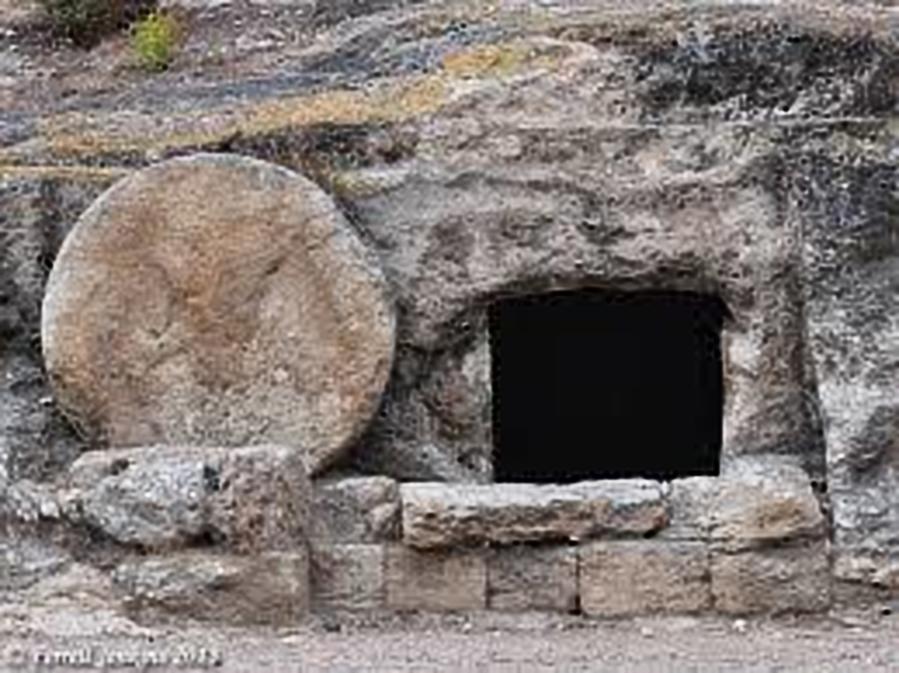
All four canonical Gospels describe Jesus’ tomb as empty.
Moreover, the resurrection proclamation assumes that His body did not remain in the grave.
Matthew, Mark, Luke, and John differ in some secondary details of their narratives.
However, all present the same central claim:
the tomb in which Jesus had been buried was found empty.
The Gospel writers also identify women as the first people to discover the empty tomb.
Therefore, the story is not centered upon the apostles heroically arriving first.
Instead, frightened and grieving women become the first witnesses to the empty grave.
What the Empty Tomb Does—and Does Not—Prove
An empty tomb by itself does not logically prove resurrection.
Someone could propose other explanations.
However, every alternative must still account for the rest of the evidence.
For example, saying:
“The disciples stole the body”
does not explain why they became convinced Jesus personally appeared to them alive.
Likewise, saying:
“They went to the wrong tomb”
does not naturally explain the appearance traditions.
Therefore, the empty tomb belongs within a cumulative case.
It becomes especially significant when considered together with the reported appearances and the transformation of Jesus’ followers.
Did God Move the Stone?
Matthew describes an angel rolling back the stone.
However, the stone was not rolled away because Jesus needed someone to let Him out.
The resurrection had already occurred.
Therefore, the open tomb functions primarily as revelation:
come and see—He is not here.
We do not need to eliminate every imaginable natural explanation for the movement of the stone before believing the larger resurrection account.
Instead, we follow the narrative as Scripture gives it.
3. The Reported Appearances Are Central Evidence for the Resurrection of Jesus
The earliest Christians did not merely claim:
“Jesus’ spirit lives in our hearts.”
They claimed to have encountered Him.
Moreover, the Gospel accounts describe experiences involving:
sight,
speech,
touch,
and meals.
Luke 24 records Jesus eating in the presence of His disciples.
John 20 describes Thomas being invited to examine Jesus’ wounds.
First Corinthians 15 lists numerous appearances to individuals and groups.
Therefore, the resurrection claim is explicitly bodily.
Christianity does not teach that Jesus’ corpse remained in the tomb while His disciples experienced an inner spiritual feeling.
The Resurrection Body Was Real but Transformed
At the same time, Jesus’ resurrection was not simply a return to ordinary mortal life.
Lazarus was raised and eventually died again.
Jesus rose to life that death would never again conquer.
Moreover, the Gospel narratives describe continuity and transformation.
His disciples recognize Him.
He bears the marks of crucifixion.
Yet His risen life also possesses qualities that go beyond ordinary pre-resurrection existence.
Therefore, Christian resurrection hope is not merely:
“the soul survives death.”
It is the hope that God defeats death itself.
4. The Transformation of the Disciples Supports the Resurrection Claim
Before the crucifixion, the disciples were confused and frightened.
Peter denied Jesus.
Moreover, Mark tells us the disciples fled at Jesus’ arrest.
Yet after Easter, these same followers publicly proclaimed that Jesus was risen and Lord.
Something changed.
Soon, they were willing to face opposition, imprisonment, and suffering rather than abandon their proclamation.
Therefore, any explanation of Christian origins must account for that transformation.
Again, suffering does not prove someone is correct.
People can sincerely die for false beliefs.
However, willingness to suffer can demonstrate something important:
sincerity.
The apostles were not behaving like men who knowingly invented a resurrection story for personal gain.
Several leading early Christians clearly suffered severely for proclaiming Christ, and early Christian sources consistently portray the apostolic movement as willing to endure persecution for that message.
5. Paul and James Are Particularly Interesting Witnesses
Two names in 1 Corinthians 15 deserve special attention:
Paul and James.
Paul had not been one of Jesus’ followers during His earthly ministry.
Instead, he persecuted Christians.
Yet something dramatically changed him.
Paul explains that the risen Christ appeared to him.
Consequently, the persecutor became one of Christianity’s most influential missionaries.
Any explanation of Paul’s life must account for that reversal.
James Also Requires an Explanation
The Gospels indicate that Jesus’ brothers did not initially believe in Him.
However, 1 Corinthians 15 specifically says the risen Christ appeared to James.
Later, James emerges as an important leader of the Jerusalem church.

Therefore, we have another significant transformation.
Again, historical data alone cannot make resurrection the only logically imaginable explanation.
However, Paul’s and James’s conversions fit remarkably well with the Christian claim that they encountered the risen Jesus.
6. The Christian Movement Was Built Around a Risen Messiah
The crucifixion should have looked like the end of Jesus’ Messianic movement.
Rome executed Him publicly.
Moreover, crucifixion represented humiliation and apparent defeat.
Yet instead of abandoning Jesus, His followers soon proclaimed Him as the risen Messiah and Lord.
That requires explanation.
They did not simply preserve His teachings.
Instead, they worshiped Him, preached His resurrection, baptized in His name, and organized communities around allegiance to Him.
Therefore, the explosive resurrection-centered identity of the early Church is historically significant.
How did the earliest Jesus movement arise immediately after its leader had been publicly crucified?
The answer given by those first Christians was consistent:
God raised Him from the dead.
7. Changed Lives Are a Testimony to the Risen Jesus
I have seen lives change.
Moreover, my own life has been changed through faith in Jesus.
People trapped in sin have found freedom.
The proud have learned humility.
Others filled with bitterness have learned forgiveness.
Therefore, Christians rightly testify that Christ continues to work in people today.
Personal Experience Should Support, Not Replace, the Gospel
Nevertheless, personal experiences must be handled carefully.
People from many religions report profound experiences.
Therefore, the argument cannot simply be:
“I experienced something, therefore Christianity must be true.”
Instead, Christian experience is interpreted through the gospel proclaimed in Scripture.
My confidence rests first in Christ and the apostolic testimony about Him.
Then my experience becomes additional personal confirmation that the risen Lord continues to transform lives.
Consequently, testimony is valuable without being made to carry more apologetic weight than it should.
Can History Prove a Miracle?
This question is important.
Historical investigation can examine:
documents,
testimony,
beliefs,
events,
and competing explanations.
However, resurrection is a supernatural event.
Therefore, historians working strictly within methodological naturalism may describe what Jesus’ followers believed without concluding professionally that God raised Jesus.
Christians do not need to hide that distinction.
Instead, we can say:
the historical evidence brings us to a remarkable set of facts and claims, while the Christian worldview provides an explanation capable of making sense of them together.
Faith is not blind.
Yet neither is it reducible to a laboratory experiment.
Alternative Explanations Must Explain the Whole Picture
Some argue that the disciples hallucinated.
However, hallucination theories must account for the variety of reported experiences and the empty tomb tradition.
Others suggest legend.
Yet the resurrection proclamation appears extremely early.
Still others propose fraud.
However, deliberate fraud struggles to explain the disciples’ willingness to suffer for what they proclaimed.
Therefore, no single alternative explanation automatically solves the historical problem.
The Christian explanation is straightforward:
Jesus really rose from the dead.
Why the Resurrection of Jesus Matters Theologically
The resurrection does more than prove that something miraculous happened.
Moreover, it belongs directly to salvation.
Romans 4:25 says Jesus:
“was delivered up for our trespasses and raised for our justification.”
First Peter 1:3 connects the resurrection with our living hope.
Furthermore, 1 Corinthians 15 connects Christ’s resurrection with the future resurrection of believers.
Therefore, Easter is not merely about Jesus surviving death.
His resurrection becomes the beginning of God’s new-creation victory over death.
Because Christ rose, believers have hope beyond the grave.
The Resurrection Vindicates Jesus
Jesus was condemned and crucified as though He were defeated.
However, resurrection reverses the verdict of His enemies.
God vindicates His Son.
Moreover, Romans 1:4 speaks about Jesus being declared Son of God in power according to the Spirit of holiness by His resurrection from the dead.
That does not mean Jesus became the Son of God at Easter.
Instead, the resurrection powerfully manifests and vindicates His identity.
Therefore, the empty tomb announces:
death did not defeat Jesus.
God raised Him.
How Should You Explain the Resurrection to Someone?
When someone asks why you believe, you do not need to deliver a forty-minute apologetics lecture.
Instead, start simply.
Explain that Jesus was crucified and buried.
Then describe the early resurrection proclamation, the empty tomb, the reported appearances, and the transformation of people such as the disciples, Paul, and James.
Moreover, explain why you believe the resurrection provides the best explanation of those realities.
Finally, share what Christ has done in your own life.
The goal is not merely to win an argument.
It is to point someone toward Jesus.
The Holy Spirit and Evidence for the Resurrection of Jesus
We should also hold together spiritual dependence and thoughtful apologetics.
Jesus said the Holy Spirit convicts the world.
However, the apostles still reasoned, explained Scripture, testified, answered objections, and proclaimed the gospel.
Therefore, saying:
“The Holy Spirit must convince people”
does not mean:
“I don’t need to prepare an answer.”
The Spirit can use careful reasoning.
Moreover, He can use Scripture, historical testimony, personal witness, and thoughtful conversation.
Our responsibility is faithfulness.
God changes hearts.
Seven Reasons Christians Believe Jesus Rose From the Dead
The cumulative case can be remembered through seven points:
- The resurrection was part of the earliest apostolic proclamation, not a legend added centuries later.
- The Gospel accounts present Jesus’ tomb as empty.
- Individuals and groups claimed encounters with the risen Jesus.
- The disciples were transformed from frightened followers into public witnesses.
- Paul and James experienced dramatic changes associated with claimed appearances of Jesus.
- The earliest Christian movement centered upon the proclamation of a crucified and risen Messiah.
- Christians continue to testify that the risen Jesus transforms lives, although personal testimony should complement rather than replace historical and biblical evidence.
Together, these form a much stronger case than any isolated argument.
Evidence for the Resurrection of Jesus: What Will You Do With It?
Years after my conversation in India, I still remember that man’s question:
“How do you know Jesus rose from the dead?”
Today, I would answer more carefully than I did then.
I believe because the apostolic testimony is early and consistent.
Moreover, the empty tomb and reported appearances demand explanation.
The transformation of Jesus’ followers matters.
Paul and James matter.
Most importantly, the resurrection fits the larger biblical story of the crucified Messiah whom God vindicated and raised.
Therefore, my faith is not merely:
“I hope something happened.”
I believe Jesus Christ truly rose.
And if Jesus rose, everything changes.
His claims matter.
His cross matters.
His gospel matters.
His lordship matters.
Moreover, death no longer has the final word.
The question is therefore not only:
“Is there evidence for the resurrection of Jesus?”
Ultimately, the question becomes:
“If Jesus really rose from the dead, what will I do with Him?”
The evidence for the resurrection of Jesus leads us beyond an empty tomb to a living Lord who calls us to repent, believe, and follow Him.
Continue the Study
What the Gospel is:
https://onisim.net/what-is-the-gospel/
The cross of Jesus Christ:
https://onisim.net/the-cross-of-yeshua-part-ii/
Why Jesus Christ is Lord:
https://onisim.net/jesus-christ-is-lord/
The virgin birth of Jesus:
https://onisim.net/the-virgin-birth-of-jesus/
Jesus and Passover:
https://onisim.net/passover-yeshua/

I am a blogger, writer, pastor, Director of Zion Romania Bible School, husband to Olguta, a father and, most importantly, a child of God. I also completed my studies at the King’s University where I earned a B.A. in Theology with a concentration in Messianic Jewish Studies. I love Israel and I love the ‘Jewishness’ of the Bible.

Thank you Oni, excellent clear encouragement! I pray the Lord will continue to guide and enable you to teach in such simple and practical language and application. Every Blessing. Your brother in Jesus’ Wondrous Love! Larry
Thank you, dear Larry! Amen and amen! God bless you!
Thank you, brther Onisim! Very straight and clear. God Bless You Forever! Jesus is God!