
This post may contain affiliate links. If you decide to make a purchase through these links, I earn a small commission at no cost to you. I do not promote anything I do not believe in or stand behind.
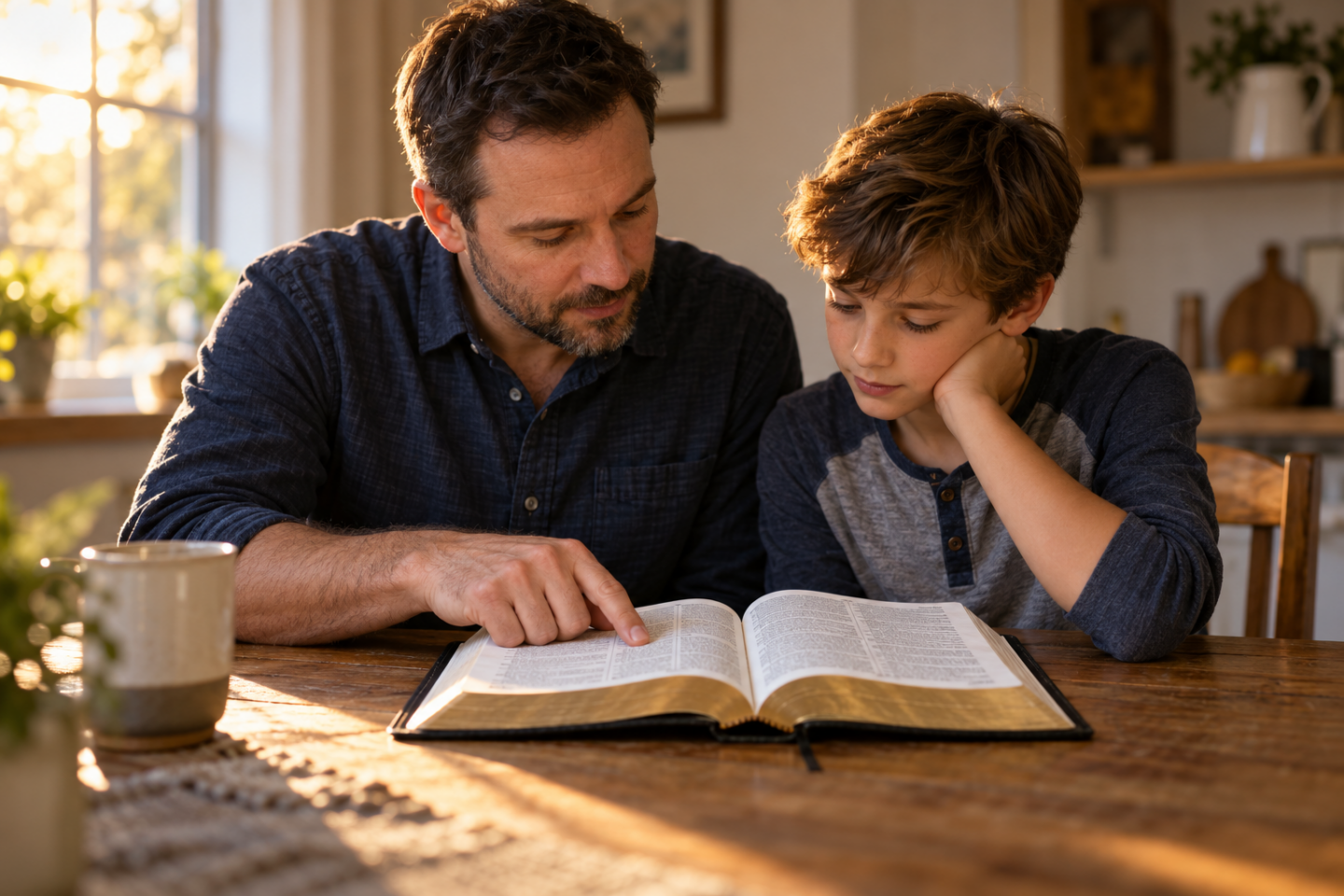
Biblical illiteracy in the church can become personal in an unexpected moment. Your son looks up from his homework and asks, “Dad, why did Jesus have to die?”
You know the familiar answer: “For our sins.” However, when he asks what that means, you struggle to explain. You have heard hundreds of sermons. There is a Bible beside your bed. Yet the words will not come.
That uncomfortable gap helps explain biblical illiteracy in the church. We can recognize Christian language while struggling to explain the message behind it.
Perhaps your question comes during a different moment. You face temptation, open your Bible, and wonder where to begin. Or someone confidently quotes a verse, but you cannot tell whether their interpretation is faithful.
As a pastor, I want to approach this with honesty and hope. You do not need to pretend you understand everything. Because Jesus welcomes humble learners, admitting what you do not know can become the beginning of growth.
The Bible beside your bed can become a book you understand, pray through, and live by.
What Biblical Illiteracy in the Church Looks Like
Biblical illiteracy means lacking familiarity with Scripture or the understanding needed to read it responsibly. However, it can take several forms.
Someone may not know the main events of the Bible. Another person knows individual stories but cannot explain how they connect. Meanwhile, a regular churchgoer may quote verses without understanding their context.
These differences matter because Bible ownership, Bible reading, and Bible understanding are not interchangeable.
For example, you might remember David defeating Goliath but struggle to explain the difference between earning God’s favor and receiving salvation by grace. Or you might recognize a promise without knowing who first received it.
Nevertheless, limited knowledge does not make someone less intelligent or less valuable. Some believers are new to faith. Others received little teaching, face reading difficulties, or lack Scripture in an accessible language or format.
Therefore, the church should become a place where people can ask basic questions without embarrassment. Growth begins when we bring our confusion into the light.
Biblical Illiteracy: What Research Reveals
The concern is real, although the evidence requires careful handling.
In Britain, Bible Society’s 2014 Pass It On report surveyed 804 children aged eight to fifteen. Among them, 43% said they had never read, seen, or heard the Crucifixion story. For the Good Samaritan, the figure was 61%.
These were children’s reports of exposure to particular stories. Consequently, we should not present them as current statistics about all British adults. www.biblesociety.org.uk
American findings also show a mixed picture. Pew Research Center’s 2019 survey found that about eight in ten adults knew Easter celebrates Jesus’ resurrection. However, only 51% correctly identified Jesus as the speaker of the Sermon on the Mount. www.pewresearch.org
The global Patmos research, released in 2025, surveyed approximately 91,000 people across 85 countries and territories. American Bible Society’s summary reported that 42% of Christians engaged with the Bible at least weekly, while 20% never used it. unitedbiblesocieties.org
These surveys measure different things, so we cannot combine them into one worldwide illiteracy rate. Still, they expose a serious gap between Christian identity and personal engagement with Scripture.
Romania Belongs in the Conversation Too
Romania should be part of this discussion. However, we must examine Romanian evidence rather than assume that British statistics apply there.
A 2022 online survey by the Romanian organization Asociația Ortodoxia Tinerilor gathered 1,573 responses about Bible teaching and parish life. Among respondents living in Romania, 29% said their priest had proposed an organized program for reading Scripture at home. Another 51% said no, while 20% did not know.
Because participation was voluntary, these results cannot represent every Romanian or every parish. Moreover, the survey measured reported practices rather than testing biblical knowledge. serilebiblice.ro
Nevertheless, these findings raise a question about biblical illiteracy in the church: are we helping people understand Scripture beyond Sunday services?
Globally, the needs also differ. Some communities need accessible translations. Others have abundant resources but little guidance. Therefore, our response must include both access to Scripture and patient teaching.
Why Biblical Illiteracy in the Church Matters
Biblical knowledge has cultural value. Without it, readers can miss the meaning of references to an exodus, a good Samaritan, or a prodigal son.
However, my deeper concern is what happens inside a believer’s life.
If we rarely encounter Scripture in context, we become more vulnerable to confident voices that distort it. A speaker may promise wealth, excuse cruelty, or turn a personal preference into God’s command. Unless we can examine the teaching, confidence may look like authority.
In Ephesians 4:11–16, Paul connects the church’s teaching ministry with maturity. Believers are meant to grow together rather than be carried around by changing doctrines.
This matters when you face private battles too. For example, after falling into sexual sin, you need more than a vague instruction to try harder. You need to understand repentance, forgiveness, accountability, and life in the Spirit.
Therefore, addressing biblical illiteracy in the church serves real people in real struggles. Sound teaching helps us recognize both the seriousness of sin and the sufficiency of Christ.
Scripture Leads Us to Jesus
Yet knowledge alone cannot transform the heart.
In John 5:39–40, Jesus addresses people who search the Scriptures but refuse to come to Him for life. They study the testimony while resisting the One it reveals.
That warning should humble every teacher, including me. We can learn theological language and still resist God’s correction.
By contrast, 2 Timothy 3:14–17 shows Scripture’s purpose clearly. Paul reminds Timothy that the sacred writings can make him wise for salvation through faith in Christ Jesus. He then explains their usefulness for teaching, correction, and preparation for good works.
Notice the connection: Scripture points us toward salvation in Christ and trains us for faithful living.
Jesus died for our sins and rose again. Because our acceptance rests on Him, we do not read the Bible to purchase God’s love. Instead, we read as people invited to know the Savior who first loved us.
Therefore, the goal is never merely to finish more chapters. We want to know God truthfully and respond with trusting obedience.
Addressing Biblical Illiteracy in the Church Through Daily Habits
You do not need a theology degree to begin. However, you do need a workable approach that makes room for understanding.
Start with these five practices. They are means of receiving God’s truth, not steps for earning His acceptance.
1. Read One Biblical Book in Order
Choose a Gospel such as Mark and read a short passage each day. Because the events connect, following the book in order helps you understand the author’s message.
Set aside ten or fifteen minutes at a realistic time. If reading is difficult, listen to an audio Bible and pause to reflect.
Before you begin, pray simply: “Father, help me understand Your Word. Holy Spirit, show me where I need to trust and obey.”
Then write one sentence summarizing the passage. If you cannot explain it simply, read it again or ask for help.
When you miss a day, resume the next day. Consistency grows through returning, not through pretending you will never struggle.
2. Ask What the Passage Means in Context
Before asking how a verse applies to you, ask what the author is communicating.
Who is speaking, and to whom?
What happens before and after this passage?
Is this narrative, poetry, instruction, or another kind of writing?
What does the passage actually teach about God and people?
For example, Philippians 4:13 is often treated as a promise of unlimited achievement. Yet the surrounding verses concern contentment in hunger, plenty, and need. Christ strengthens Paul to remain faithful in changing circumstances.
That truth offers real help when life is hard. For further practice, my guide on how to think theologically explains how to examine beliefs and decisions through Scripture.
3. Learn the Bible’s Larger Story
Individual passages become clearer when you understand the story they belong to.
Begin with this basic outline: God creates; humanity rebels; God makes covenant promises; Jesus comes, dies, and rises; the Spirit forms God’s people; Christ will return and renew all things.
This outline is a starting point, so keep learning the details as you read.
In Luke 24, Jesus explains how the Scriptures bear witness to His suffering and glory. Therefore, we should read with attention to how each passage belongs within God’s unfolding purposes.
However, that does not mean inventing hidden symbols for Jesus in every detail. Respect the passage’s original setting while learning how it contributes to the whole biblical story.
4. Learn Alongside Other Believers
Private reading matters, but God also teaches His people through the church.
In Nehemiah 8, the people hear the Law read and explained so they can understand it. Similarly, we need teachers who patiently make the meaning clear.
Join a group that opens the biblical text and welcomes questions. When someone offers an interpretation, ask kindly, “What in the passage leads us to that conclusion?”
If you are a father, bring that same spirit home. Read a short passage with your family, explain unfamiliar words, and admit when you need to learn more.
You can also explore my Bible study resources for tools that support careful reading. Nevertheless, keep returning to Scripture itself as the authority by which teaching is tested.
5. Turn Understanding into One Act of Obedience
James 1:22–25 warns against hearing God’s Word without doing it. Therefore, finish your reading with a specific response.
If the passage exposes dishonesty, tell the truth where you have been hiding. If it calls you to forgive, ask God for help taking a faithful step. When it reveals pride, confess it rather than immediately thinking of someone else.
For a man battling pornography, obedience might mean speaking honestly with a trusted believer and removing a familiar route to temptation.
However, a reading habit does not make temptation disappear. Christians still need repentance, practical boundaries, fellowship, and the Spirit’s ongoing help.
Ask, “What response fits this passage today?” Then pray for grace to follow through.
Open the Bible You Already Own
Return to that conversation with your son.
You may still encounter questions you cannot answer. However, your response can change: “That matters. Let’s open the Bible and learn together.”
That is a meaningful beginning. Biblical illiteracy in the church is challenged whenever believers choose humble learning over pretending, careful reading over assumptions, and obedience over empty familiarity.
If you have neglected Scripture, bring that honestly to Jesus. His finished work gives you a foundation for repentance and a reason to begin again. You can depend on His Spirit as you grow.
Tonight, open Mark 1. Read a short passage, write down what it teaches, and pray about one faithful response. Repeat tomorrow.
The Bible beside your bed does not need to remain a symbol of the faith you profess. Open it, and let its truth shape the life you live.

I am a blogger, writer, pastor, Director of Zion Romania Bible School, husband to Olguta, a father and, most importantly, a child of God. I also completed my studies at the King’s University where I earned a B.A. in Theology with a concentration in Messianic Jewish Studies. I love Israel and I love the ‘Jewishness’ of the Bible.

Leave a Reply